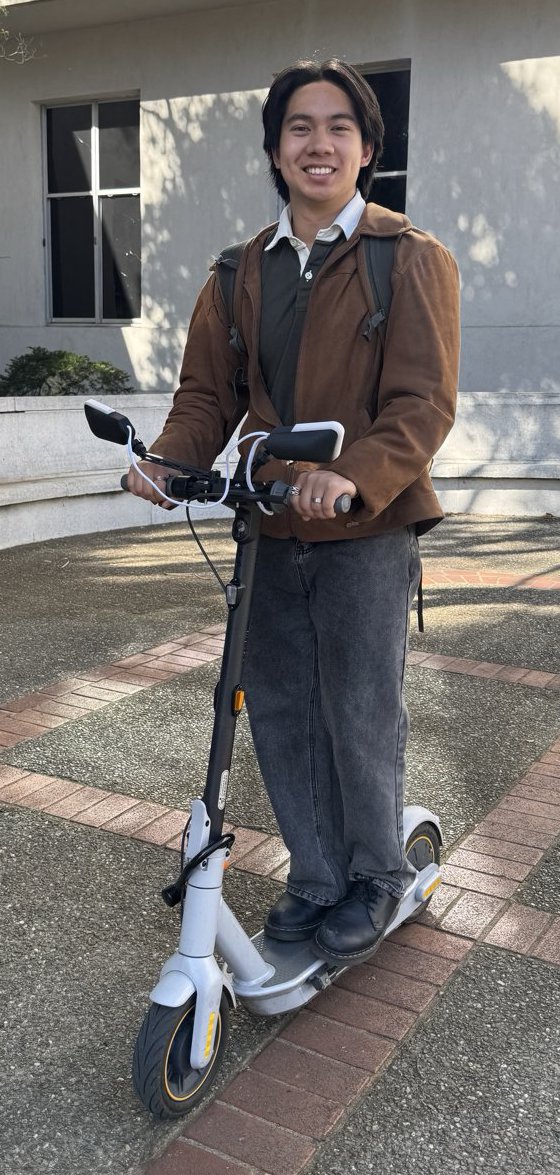
For my product development class, my team and I made an electric scooter mirror and turn signal product to increase safety for riders and pedestrians. Through the semester, we went through the full product life-cycle to create this device, including market research, customer interviews, product requirement definition, concept selection, design sprints, and various prototype rounds. As a result, we created a marketable product that we are proud to show!
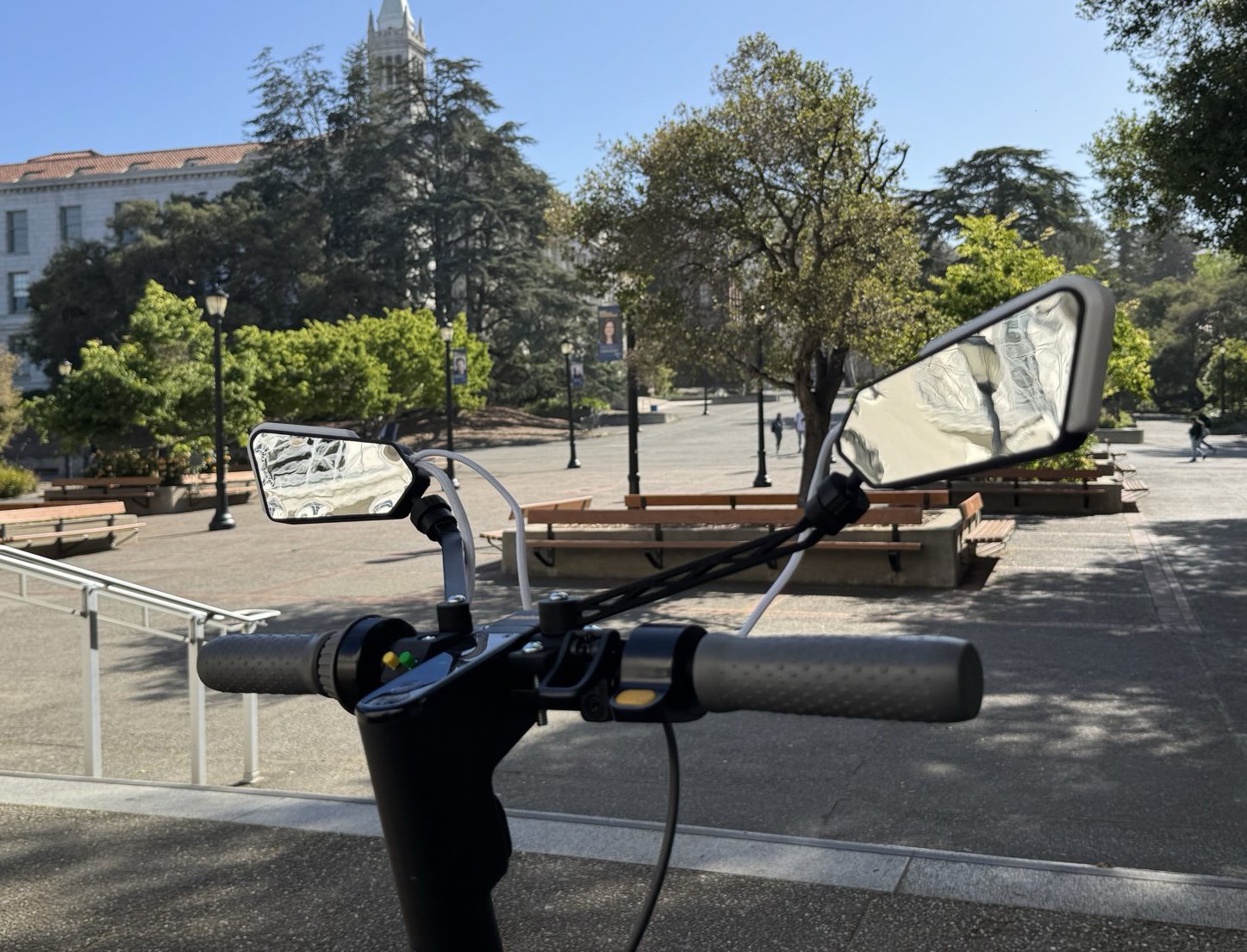
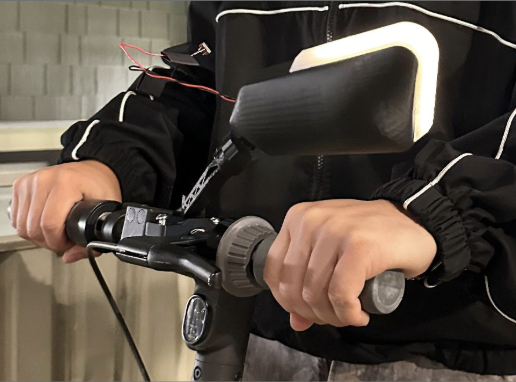
Throughout this project, I served as the project lead, organizing deliverables for teammates and fully designing and manufacturing the product.
Problem
The usage of electric scooters has dramatically increased in recent years. Electric scooters are commonly used among students and young adults due to their convenience in urban settings. However, with more users riding scooters and bicycles through cities and dense traffic, safety issues arise. Currently, most e-scooters lack effective safety features that make the rider visible to their surroundings. This leaves groups that rely on e-scooters prone to accidents and injuries. Specifically, a 2019 UCLA study reported 249 e-scooter injuries in one year, all from just two hospitals. Thus, there is a pressing need for a product that addresses the key safety concerns of scooter and bicycle riders.
Competitive Landscape
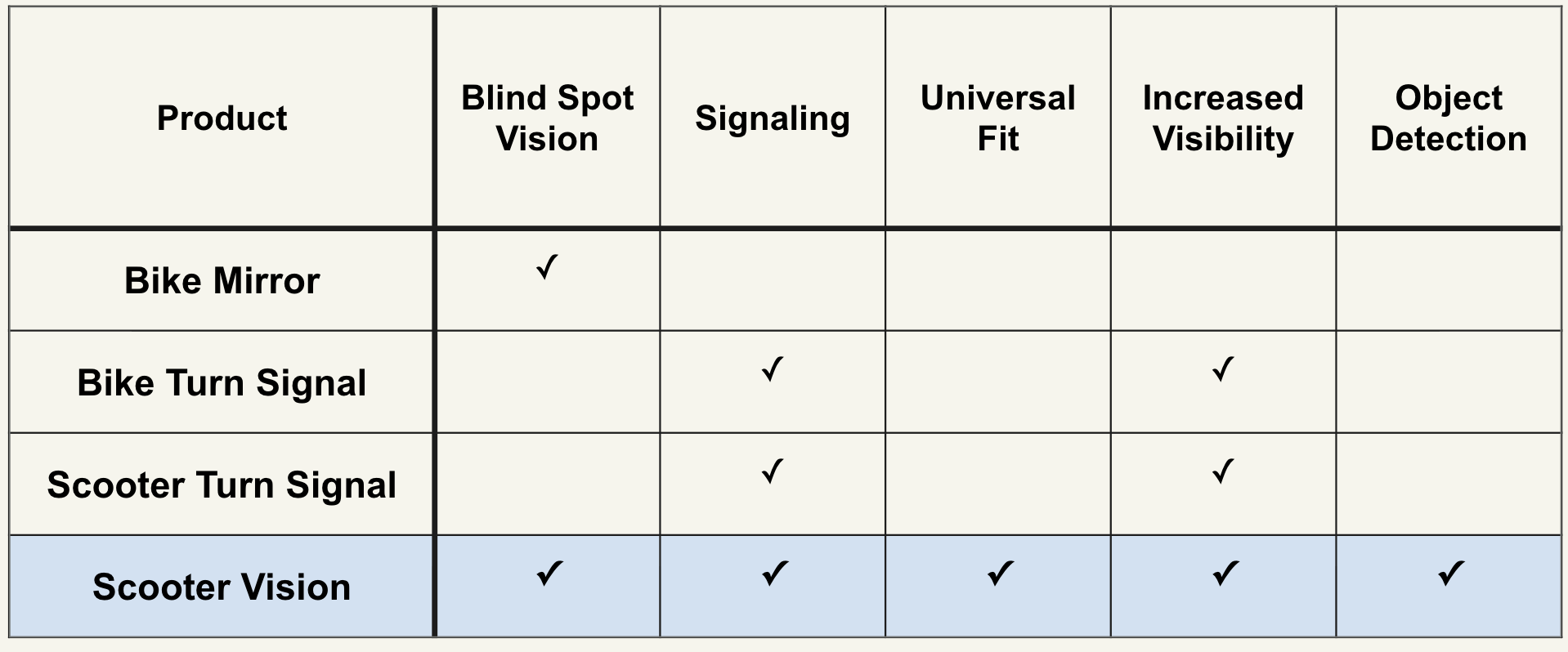
To build a product that addresses key scooter safety needs, we first ran an in-depth analysis of the competitive landscape and existing safety features. A survey of patents revealed that nearly all products in the scooter and bicycle safety space only address one user need at a time. For example, the scooter mirror only provides road awareness for the rider, while the scooter turn signal only provides communication between the user and other drivers.
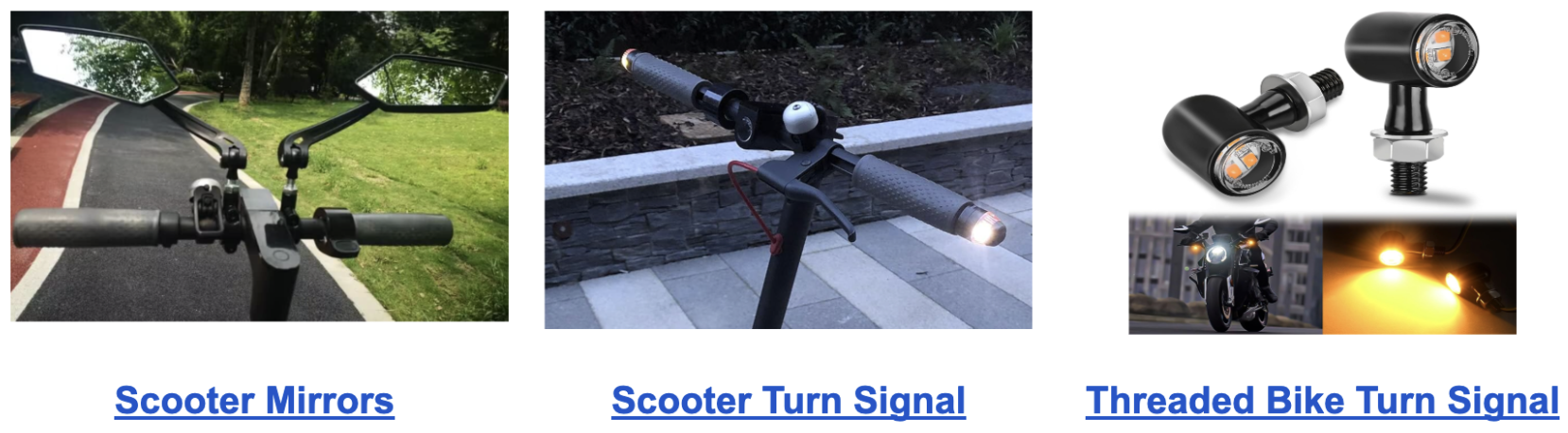
After conducting our competitive analysis, we concluded that there are no products that address multiple safety concerns for electric scooters, such as visibility and awareness. This gap in safety integration was an opportunity for us to target.
User Research
We interviewed 35 UC Berkeley students who ride scooters daily, asking about their safety concerns, products they may already be using, and what they wished existed. We clustered response topics into seven need categories and ranked them by how often they came up:
- Enhanced visibility & signaling (high priority)
- Rider awareness & collision avoidance (high priority)
- Stability & control on rough terrain (high priority)
- Anti-theft & security (medium priority)
- Compact, portable, modular (medium priority)
- Dedicated infrastructure & regulation (lower priority)
- Comfort & convenience (lower priority)
The top two are the same problems present in the competitive analysis, furthering our need to address this issue.
Ideation and Decision Matrix
For initial brainstorming, we generated 70 concept ideas and clustered them into six categories based on customer needs: Enhanced Visibility/Indication, Enhanced Rider Awareness, Scooter Stability on Rough Terrain, Anti-Theft, Compactness & Portability, and Comfort & Convenience. Concepts included LED helmets, smart mirrors, and gesture-controlled gloves.
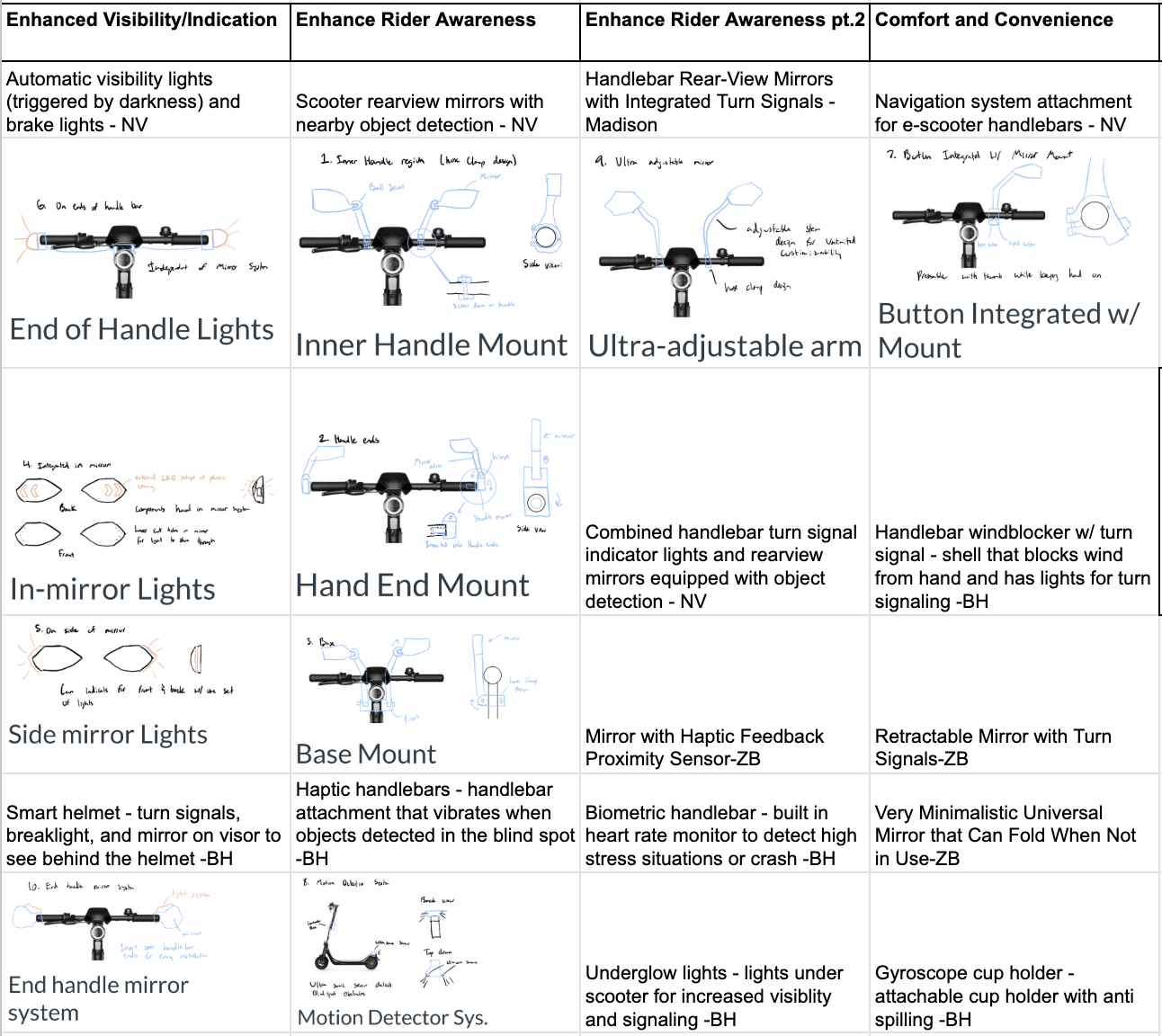
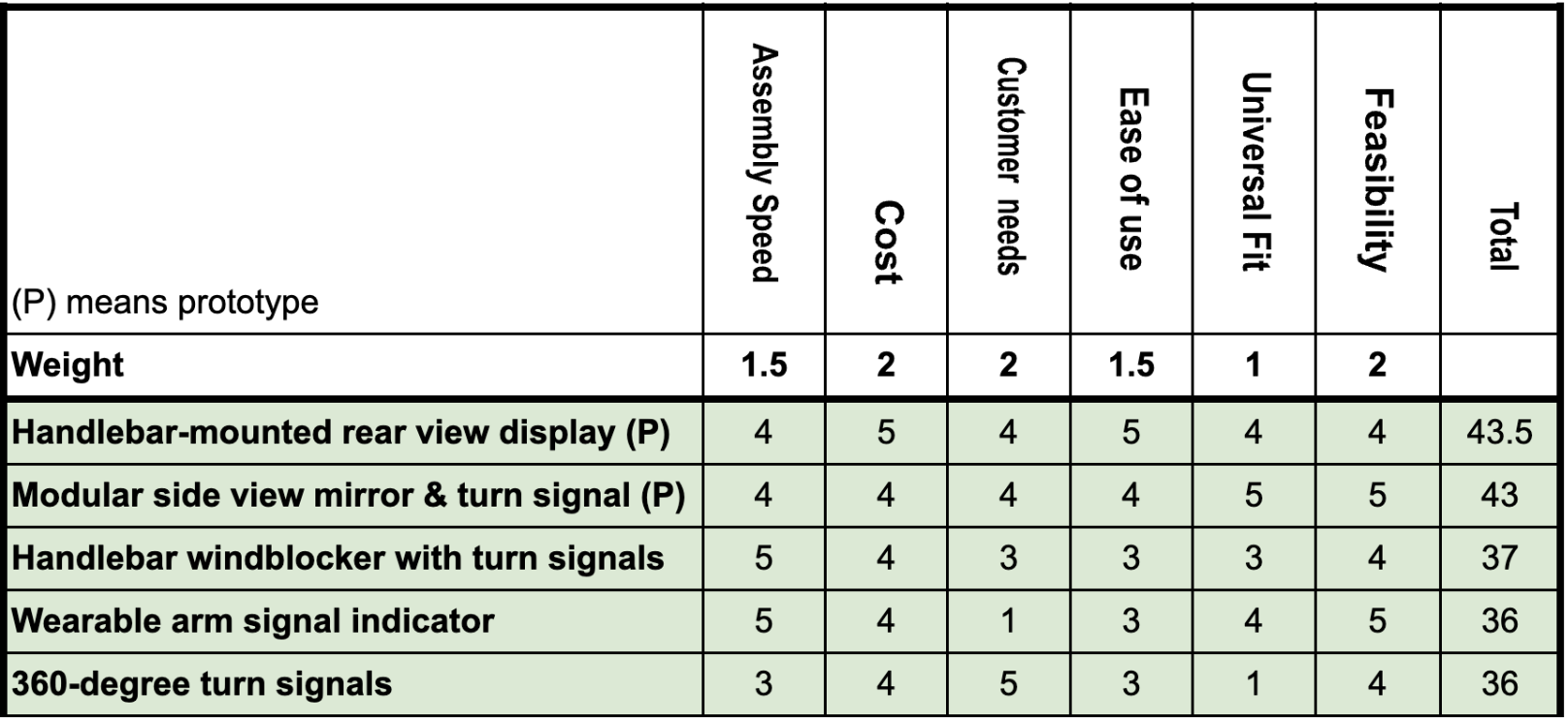
From these designs, we created a Pugh Matrix with Cost, Customer Base, and Feasibility being the most important factors for our designs. The top 2 selected designs were actually my designs, which validated my efforts to create flushed out and well thought out designs. Both were carried into prototyping.
Design Specifications
From the interviews and our matrix, we drafted the requirements our product must satisfy:
- Total assembly under 5 lb
- Mirrors adjustable for riders from 4′10″ to 6′2″
- Detachable, but clamps securely to the handlebar
- Withstands 15 lb without permanent deformation
- Installation in under 5 minutes, no special tools
- Proximity sensor detects objects within 5 ft
- Adds no more than 2.5 ft total wingspan
- Turn signals legible at 3 m
Sketches
With my sketch concepts selected as the design to move forward with, I then turned to the first prototype design. Initial sketches helped me determine the shape and roughly define the dimensions of Scooter Vision. This step was essential, as the mirror and mounting placement must not interfere with the rider's range of motion and existing scooter features. Using a phone camera, I measured the optimal position of the mirrors and initial mirror sizing.
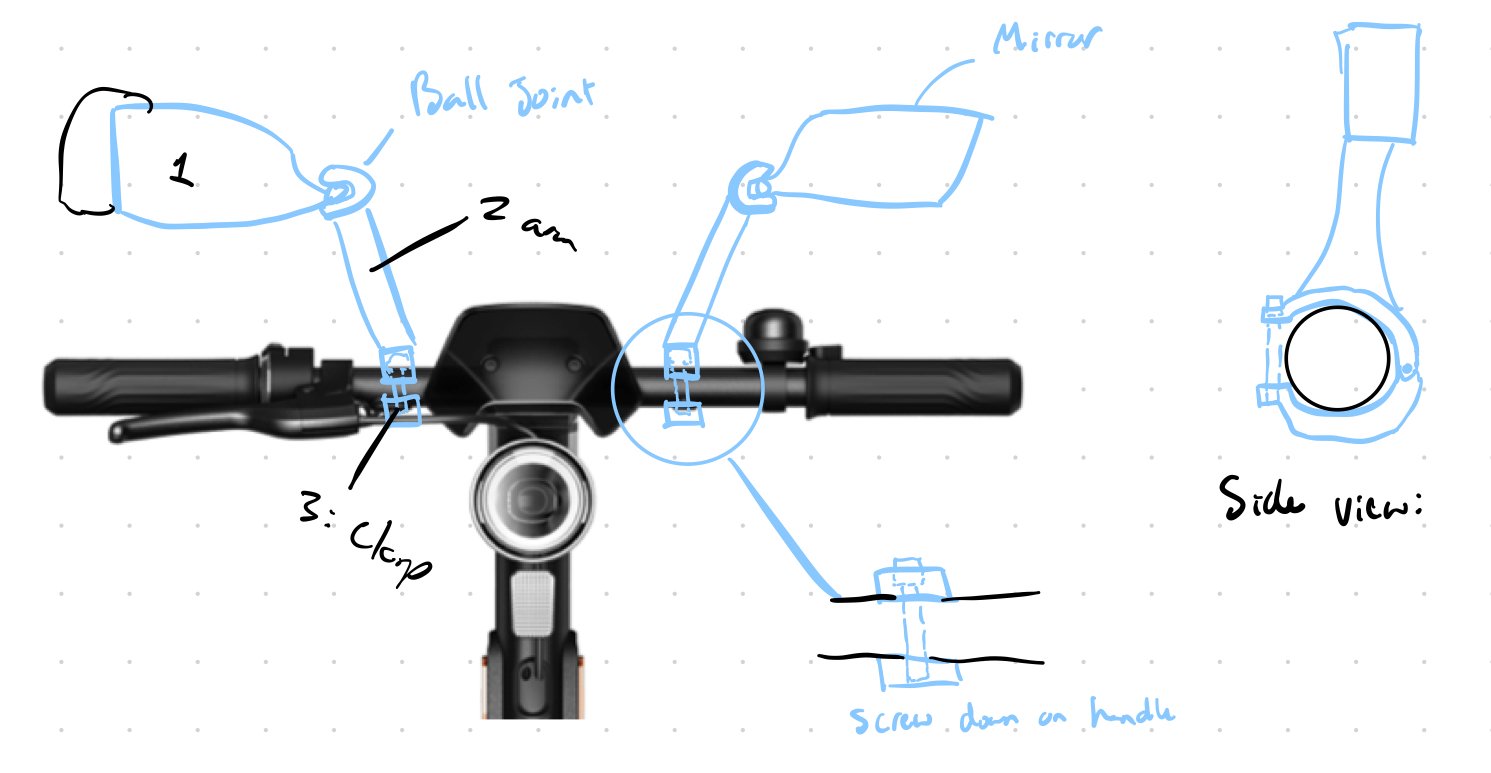
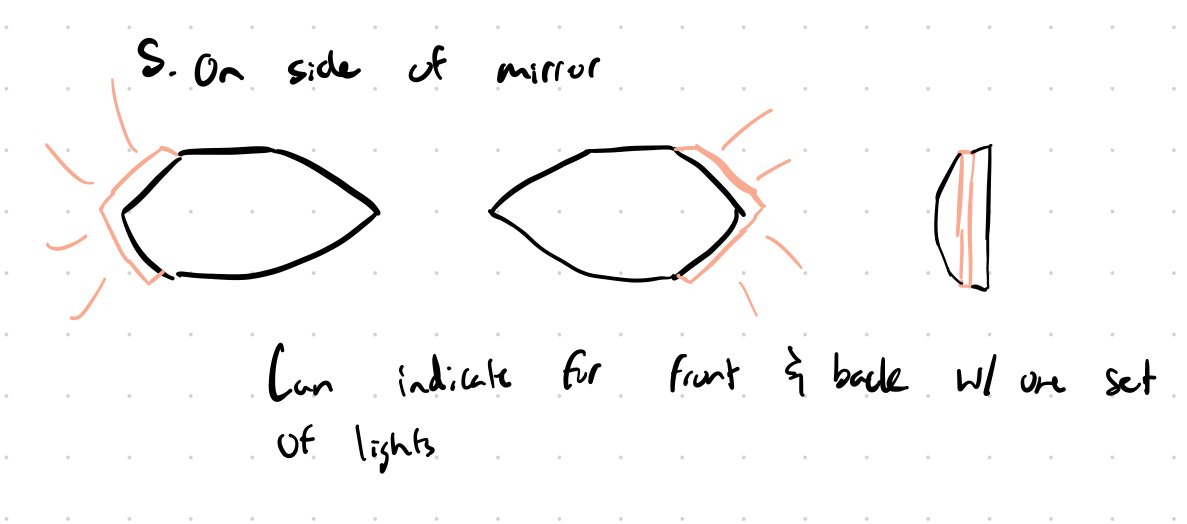
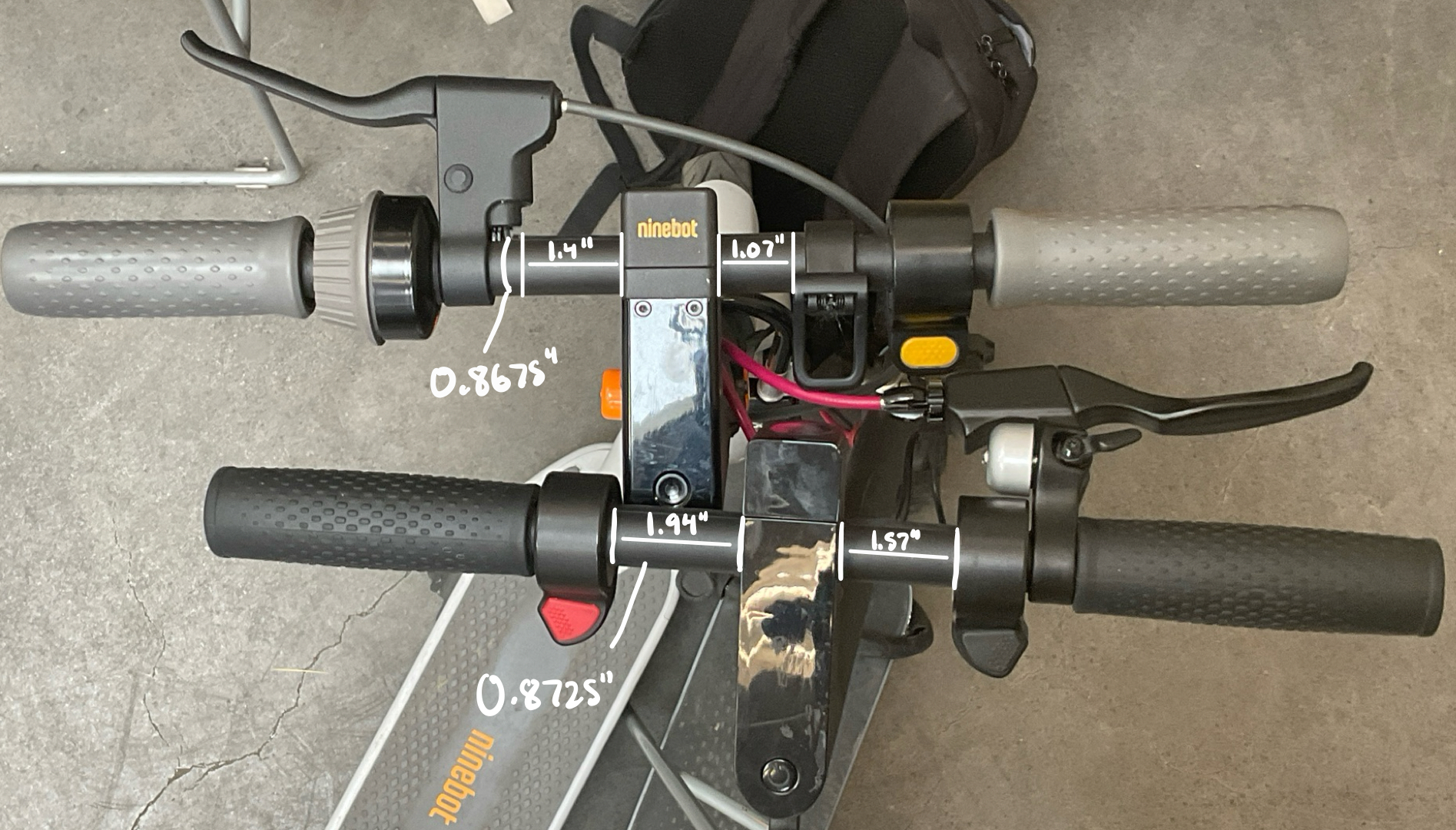
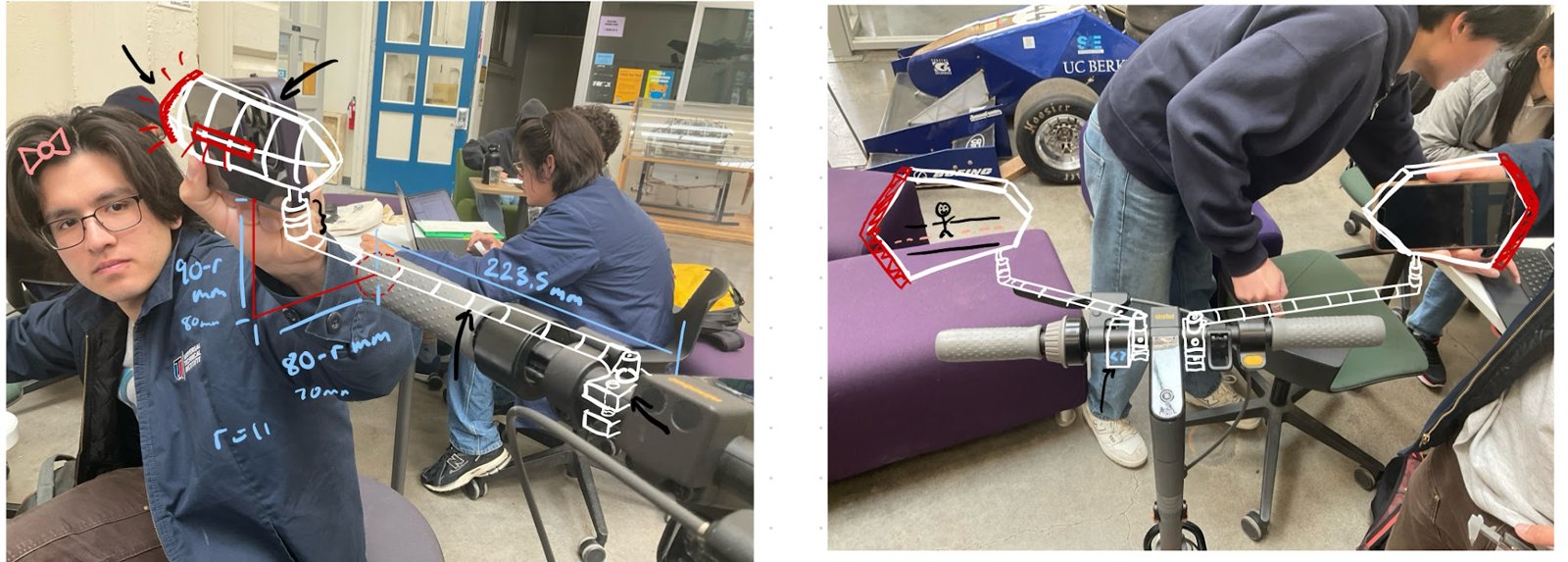
Preliminary product sketches used to explore form factor and mounting strategies.
CAD Model
During the CAD design process, finding the position and scale for the mirror arms proved to be a difficult task and required frequent readjustment. To solve this, I added a hypothetical rider to help with determining the overall footprint. This project was a great chance to learn surface modeling, which I implemented for the sloped housing design.
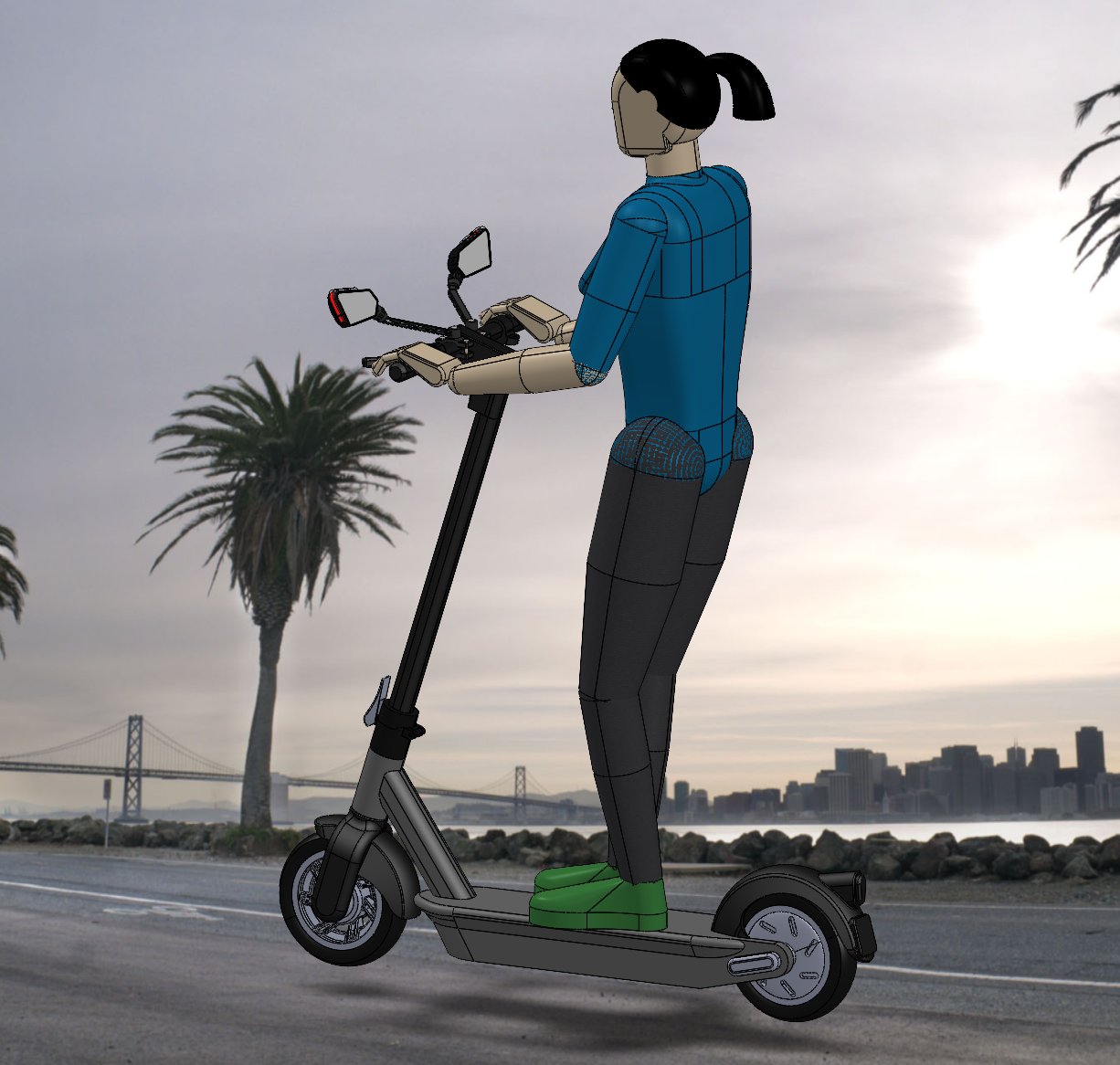
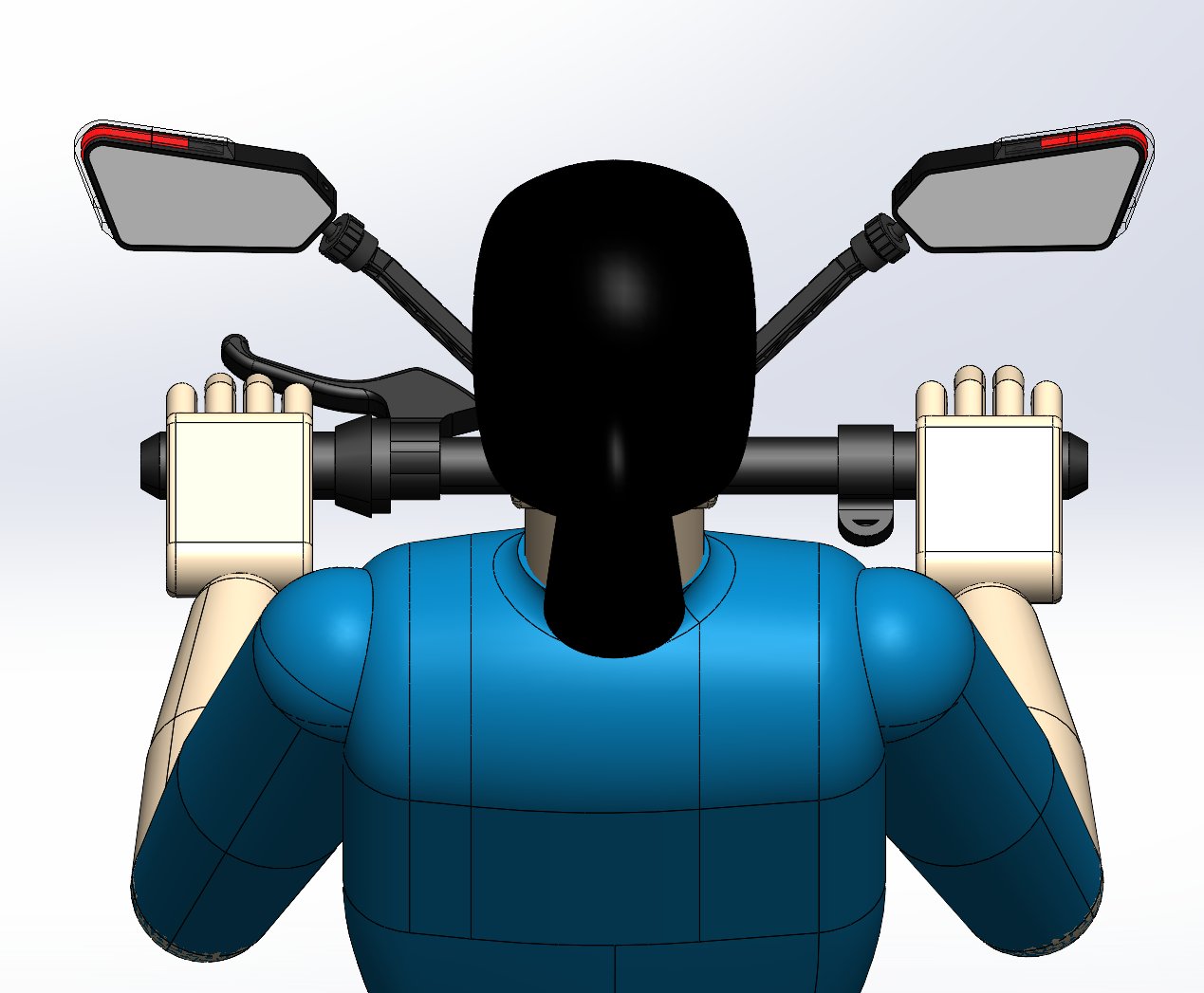
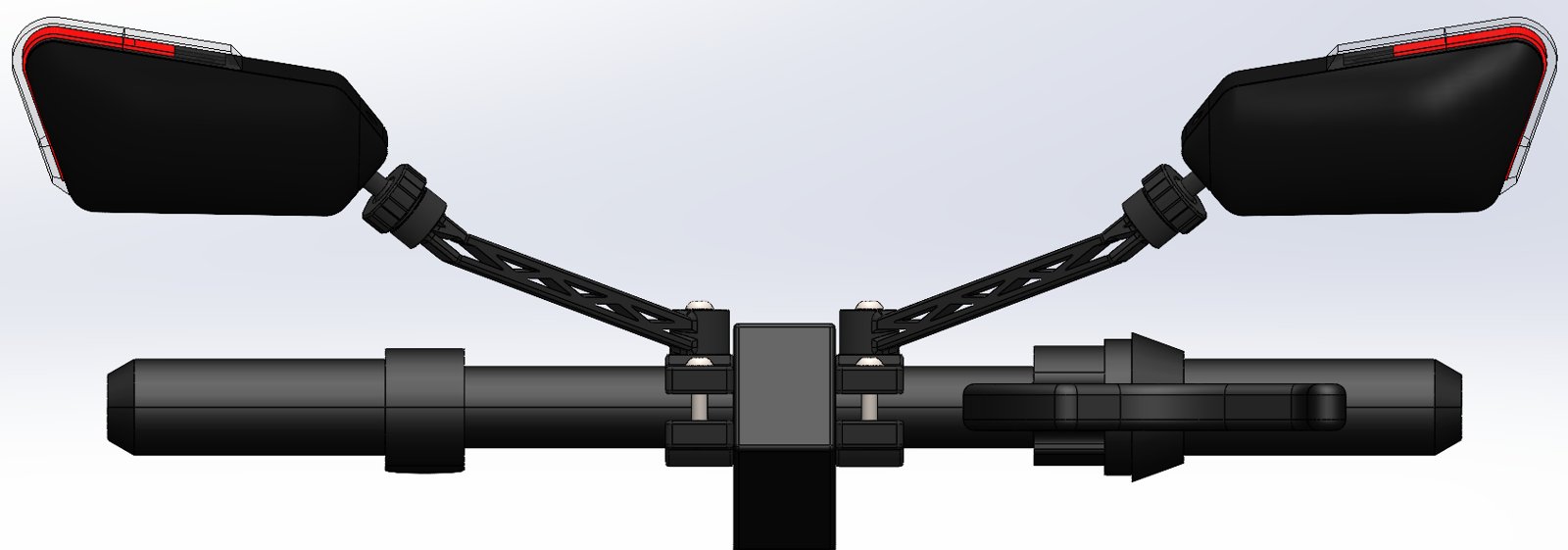
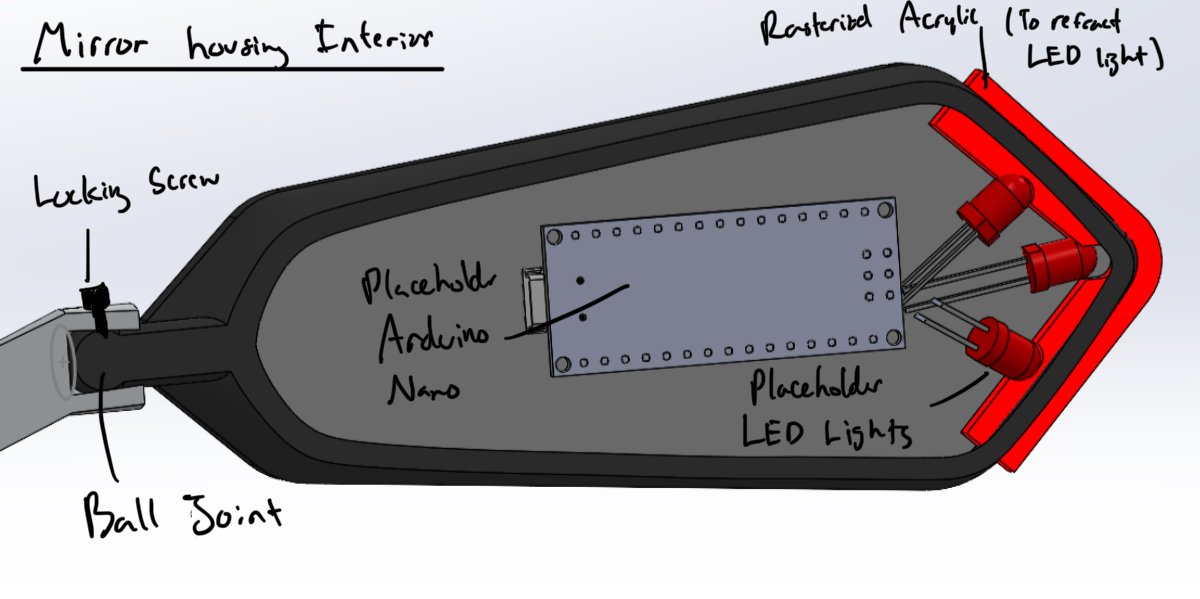
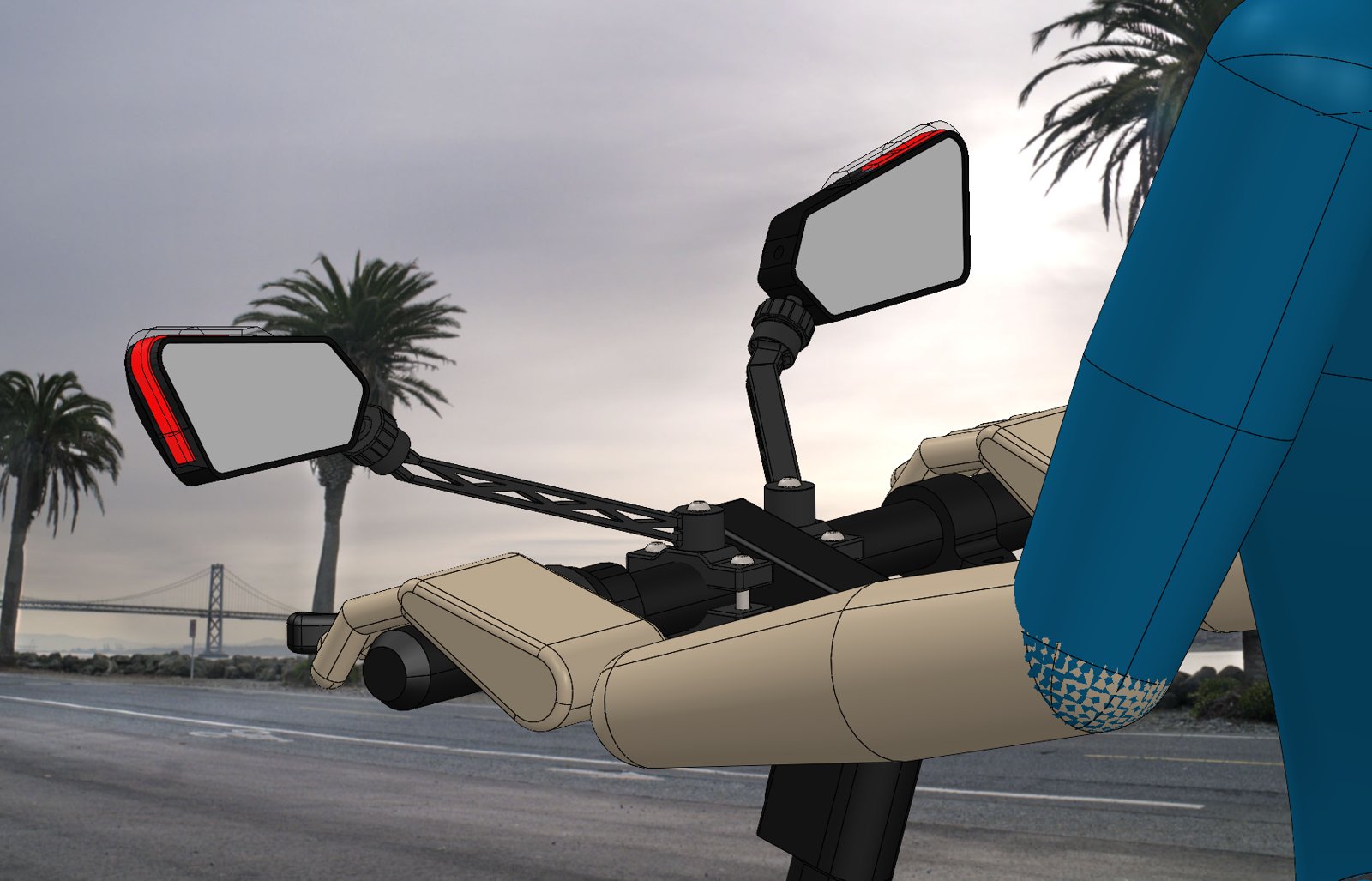
SolidWorks CAD rendering with a rider reference for ergonomic testing.
Prototype 1: Lockable Ball Joint and Integrated Light System
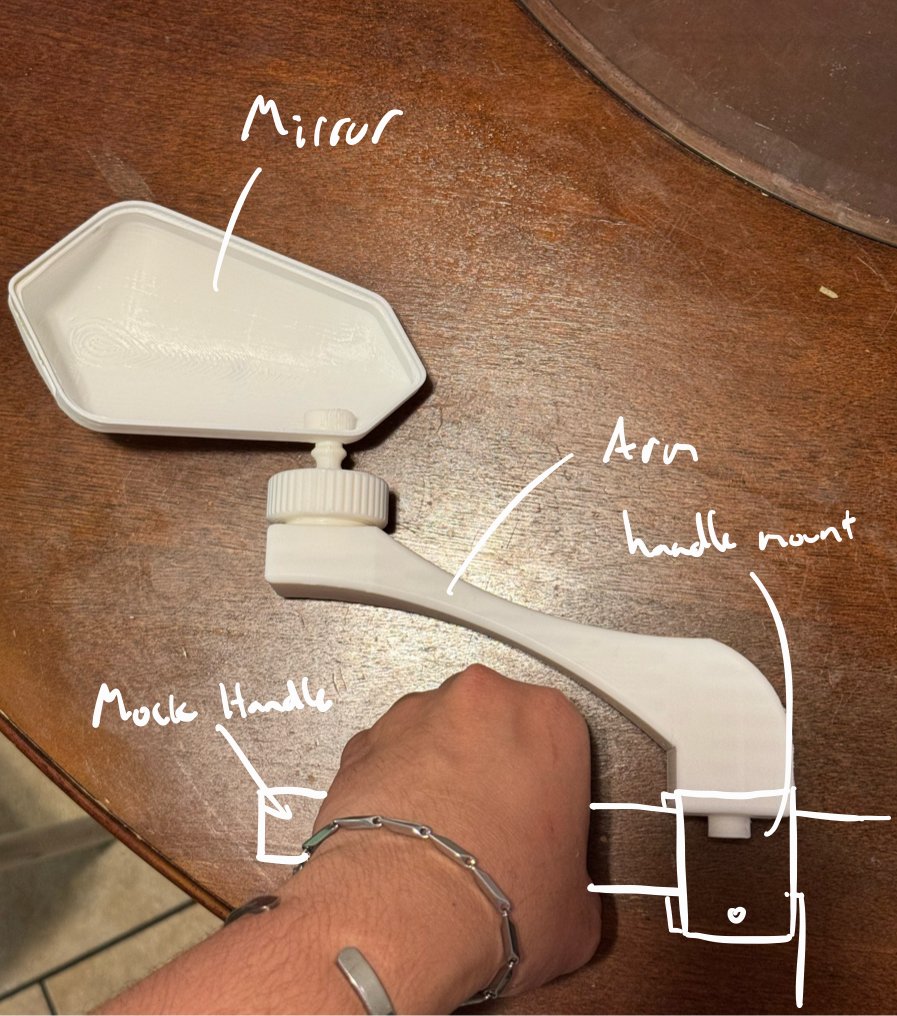
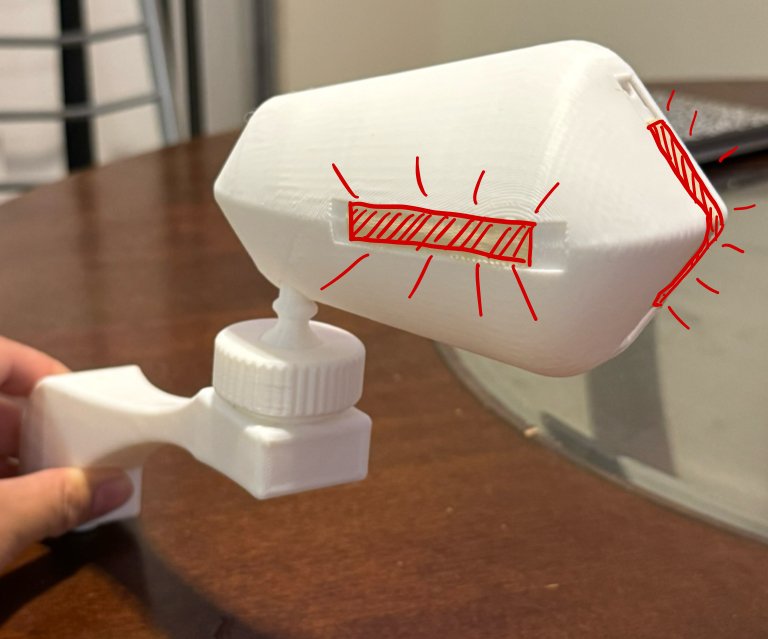
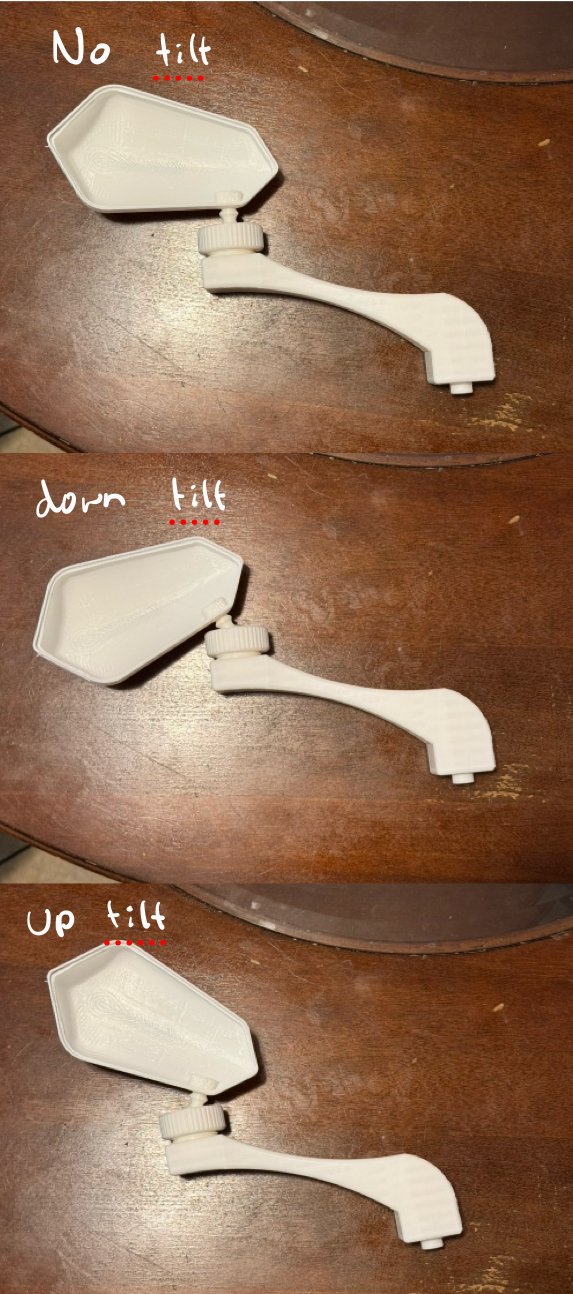
The purpose of the first prototype was to visualize the scale of the mirror and the dimensions of the mirror arm/angles using 3D printed parts. I successfully developed a working custom lockable ball joint, but definitely needed to reduce the size for the final design to increase portability. Additionally, the arm on future prototypes would need to be extended and designed for reduced deflection in our required load case (vertical direction). This prototype served as a proof of concept, and additional features of lighting, switch, battery, and control system would be later implemented.
Functional Prototype
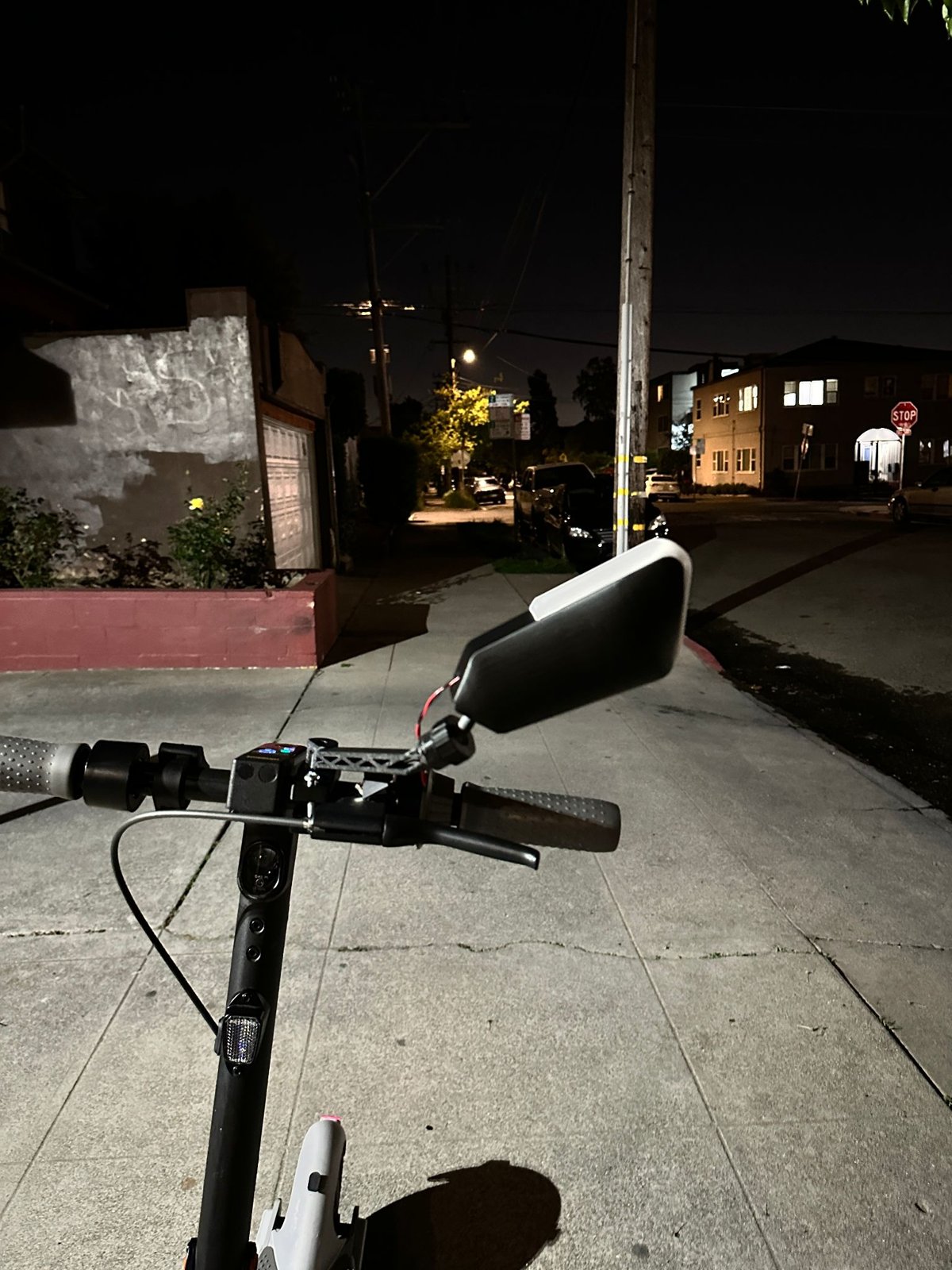
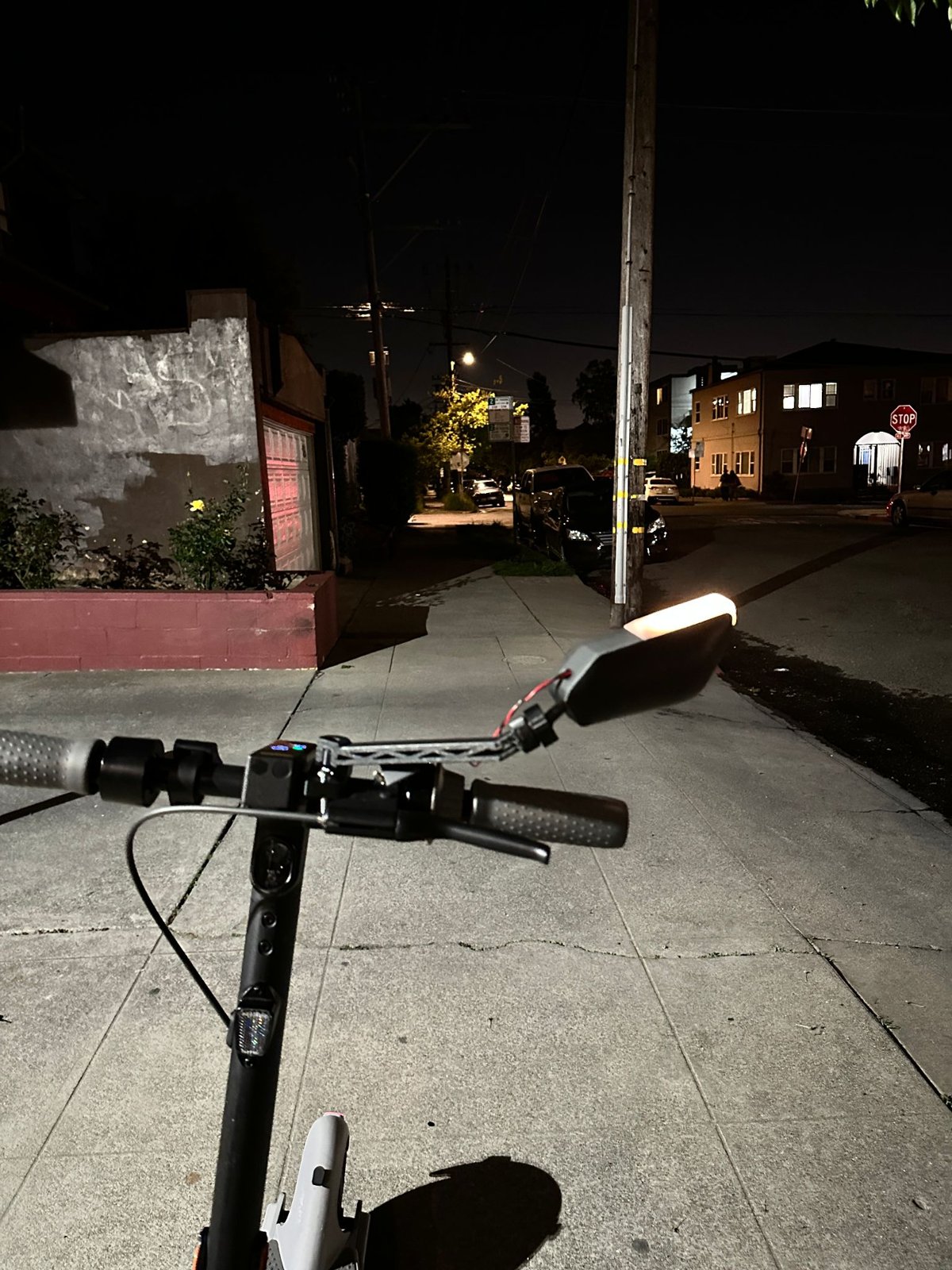
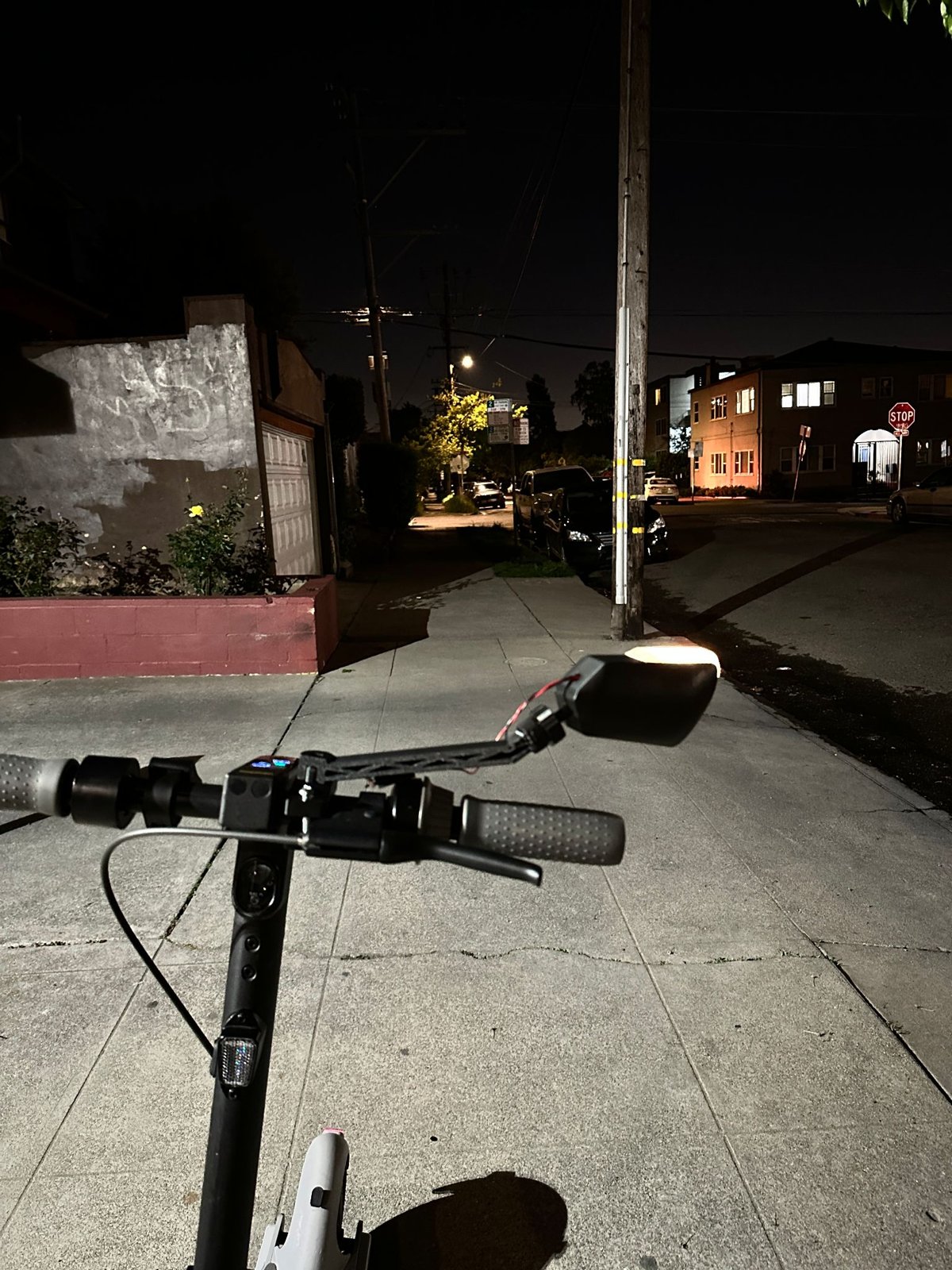
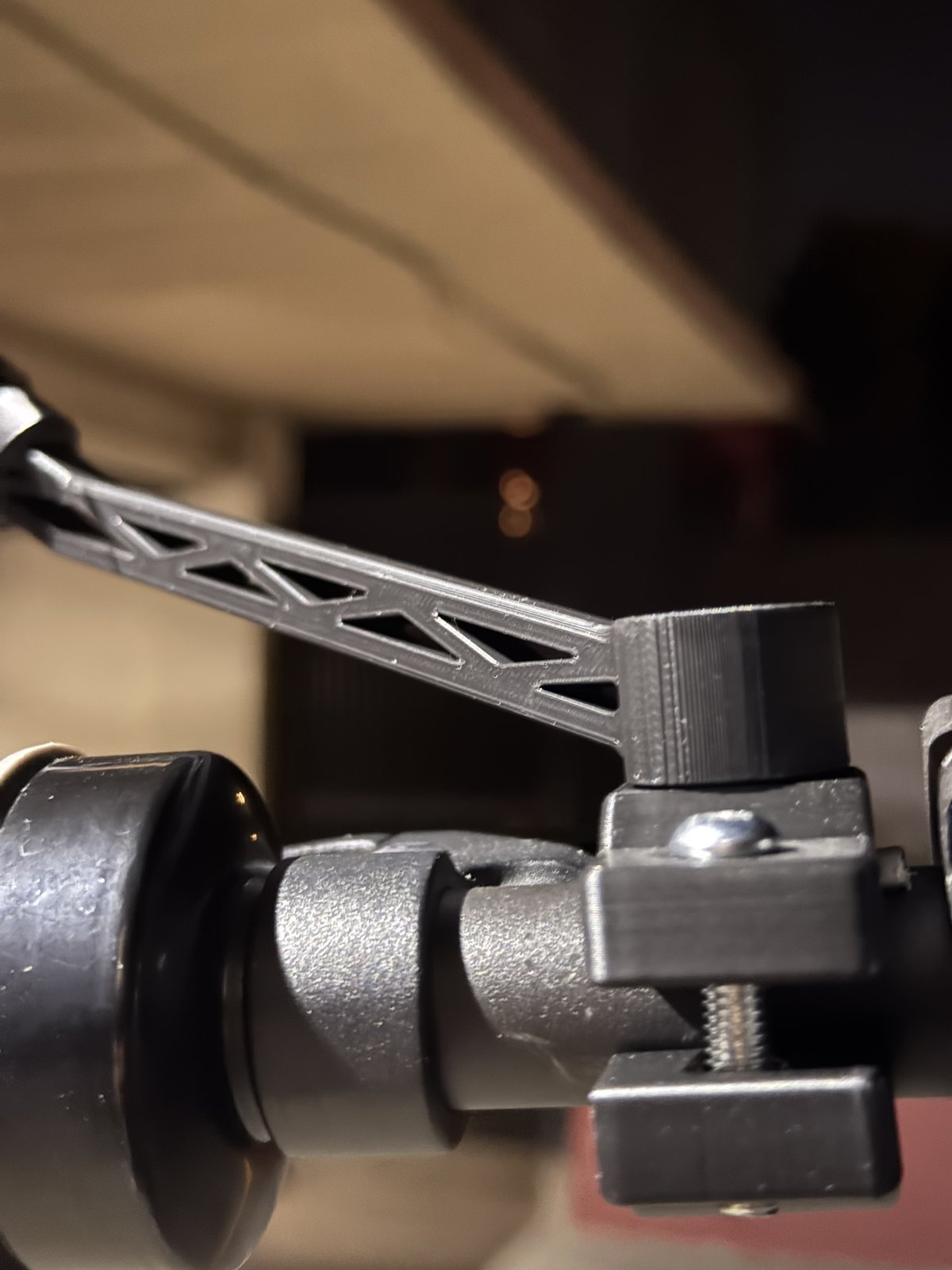
This high-fidelity prototype included the full mechanical and electrical functionality we intended. Improving upon my previous design, the arm strength and stability were enhanced by incorporating a more complex cross-section and robust mounting system. The ball joint mechanism was also revised to be half as big while having a similar range of motion.
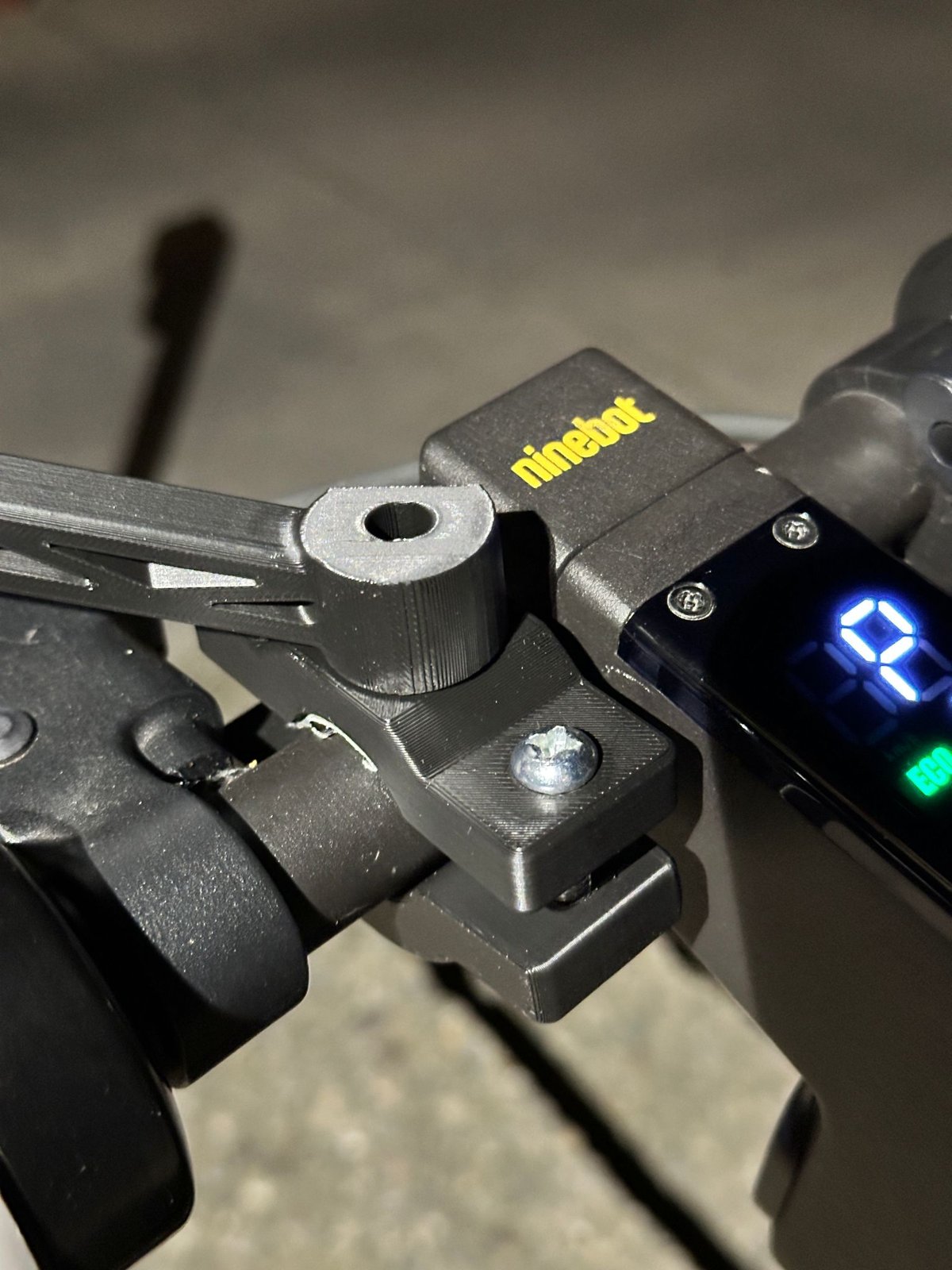
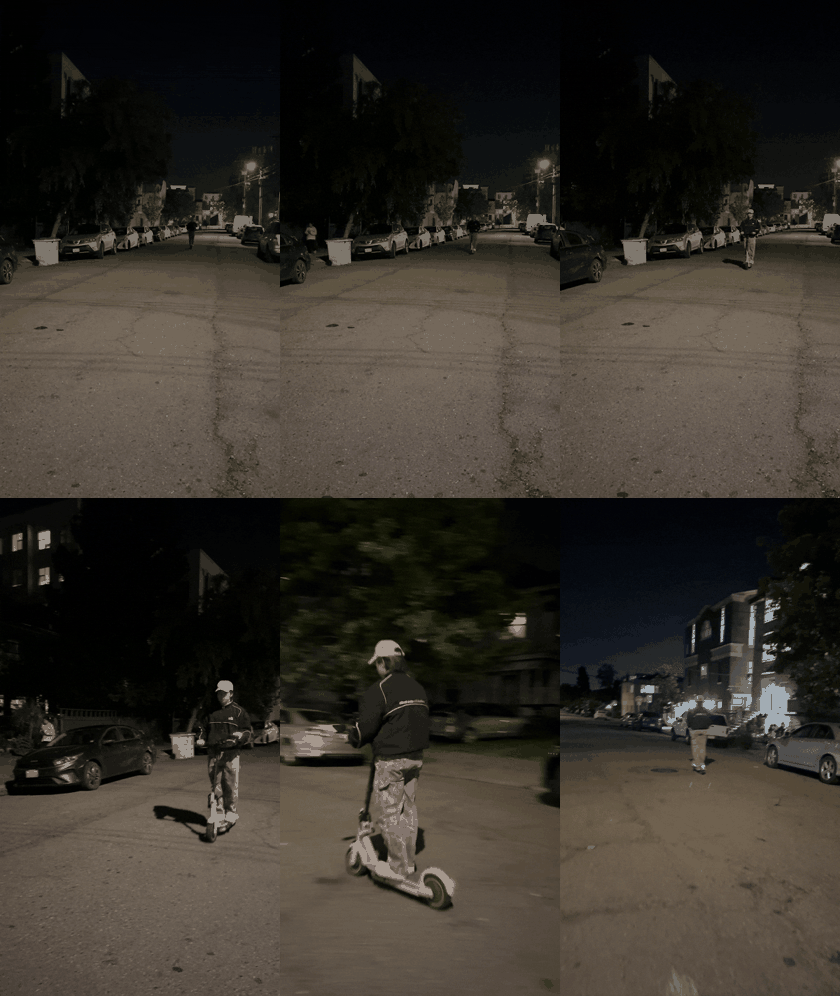
The handlebar clamp was designed and prototyped for simple and easy installation. The mirror shape was further optimized to enhance visibility and enlarged to accommodate electronics. Two switches were also placed near the handlebars, allowing riders to operate it safely during operation.
User Adjustability
Additional Features
Reflection
Given the time we had, I am proud of how much work we have accomplished to arrive at a novel product that solves an issue we see every day on campus. This project also gave me insight into the product development cycle, especially in identifying problems and selecting promising concepts. Reflecting on the process, one key thing I would do differently is start physical prototyping sooner. Allowing more time for iterative testing, such as evaluating mirror placement and turn signal visibility from both rider and pedestrian perspectives, would have saved significant time second-guessing my 3D modelling. It would have also been helpful to invite our interviewees from earlier in our project to provide feedback on our prototypes. Getting these products in the hands of real consumers would have created a lot of insightful discussion and design changes. Our early concepts also included motion sensors for safety alerts, which we hope to add to a later prototype after this class concludes.