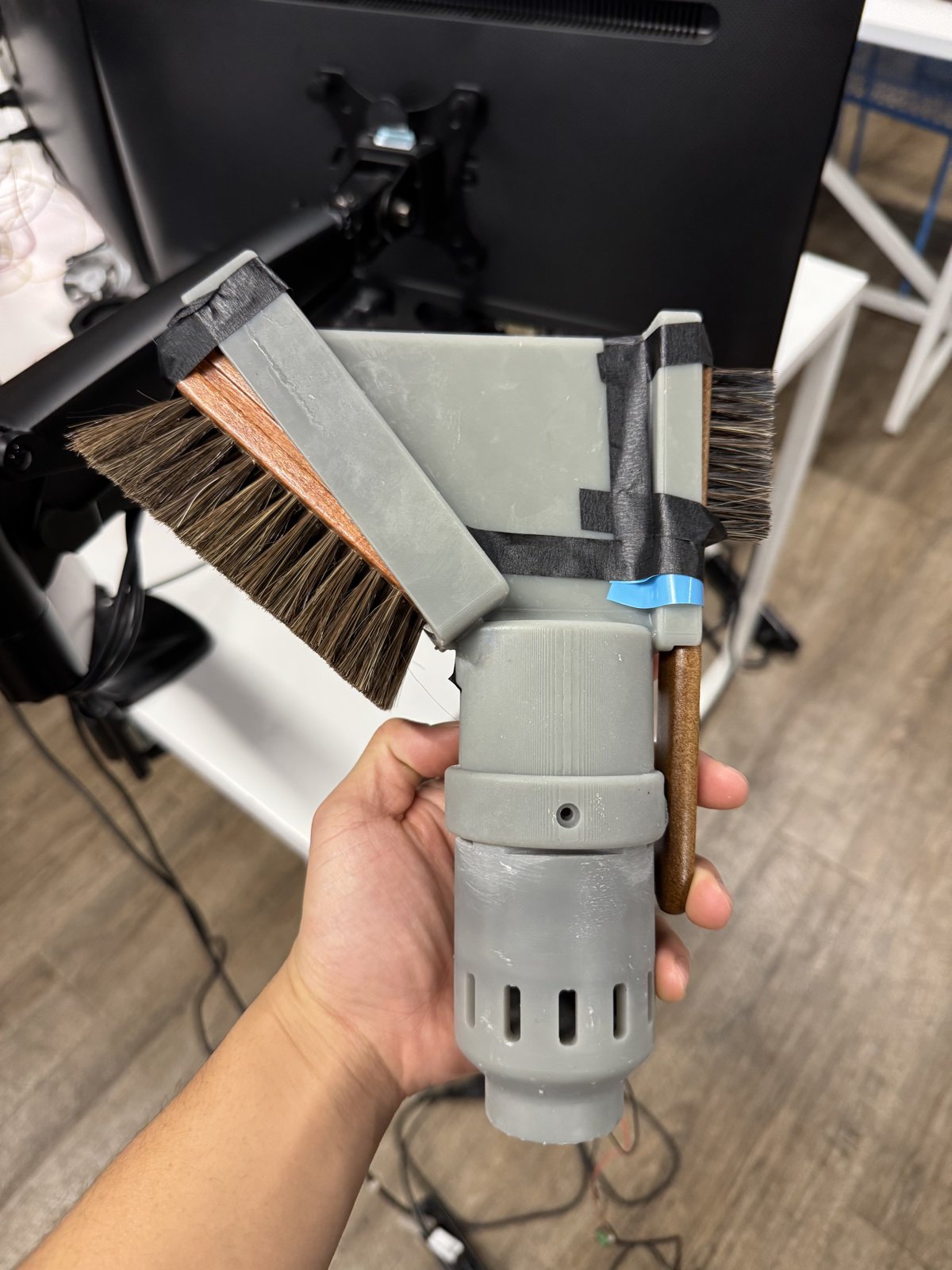
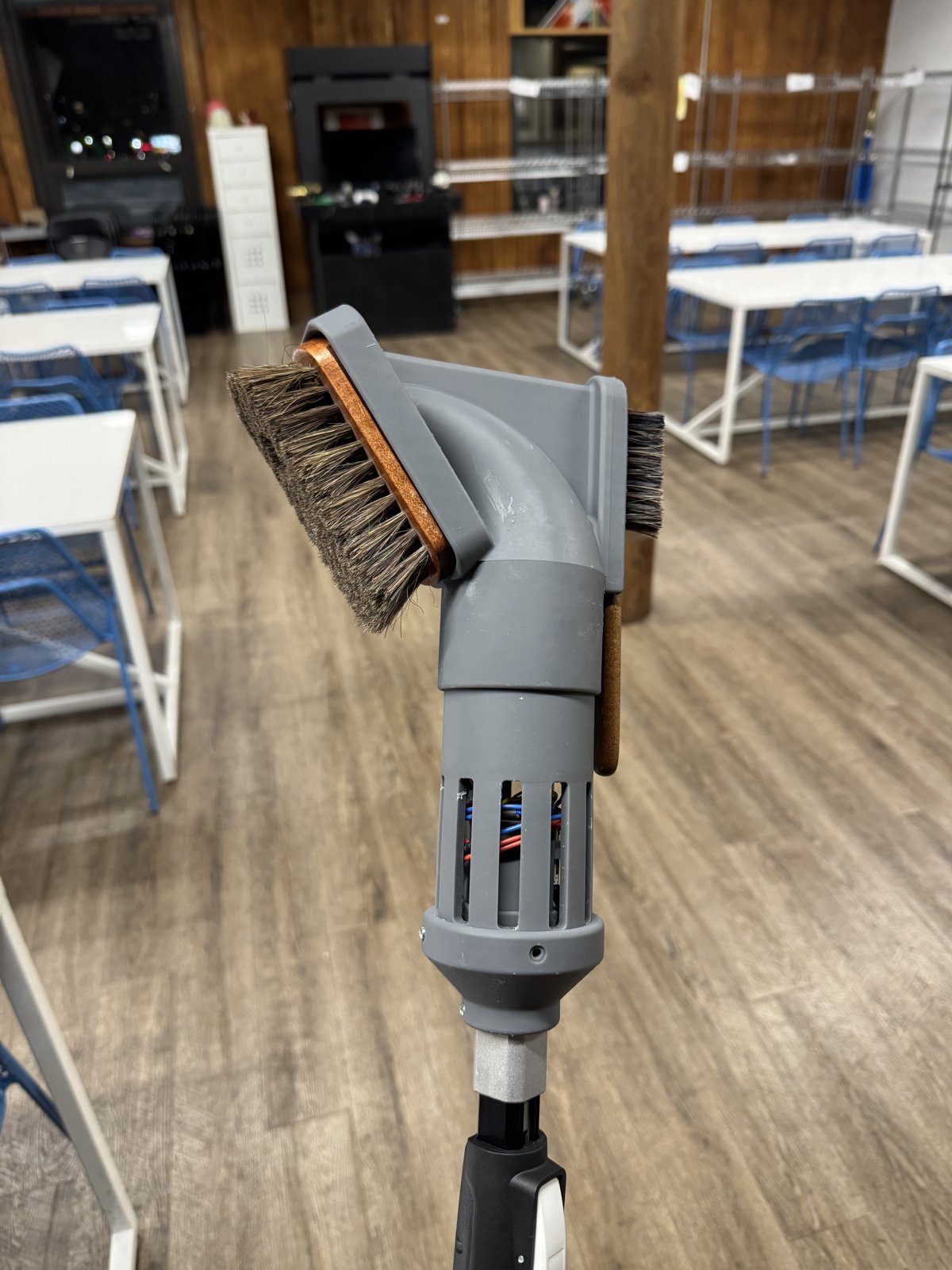
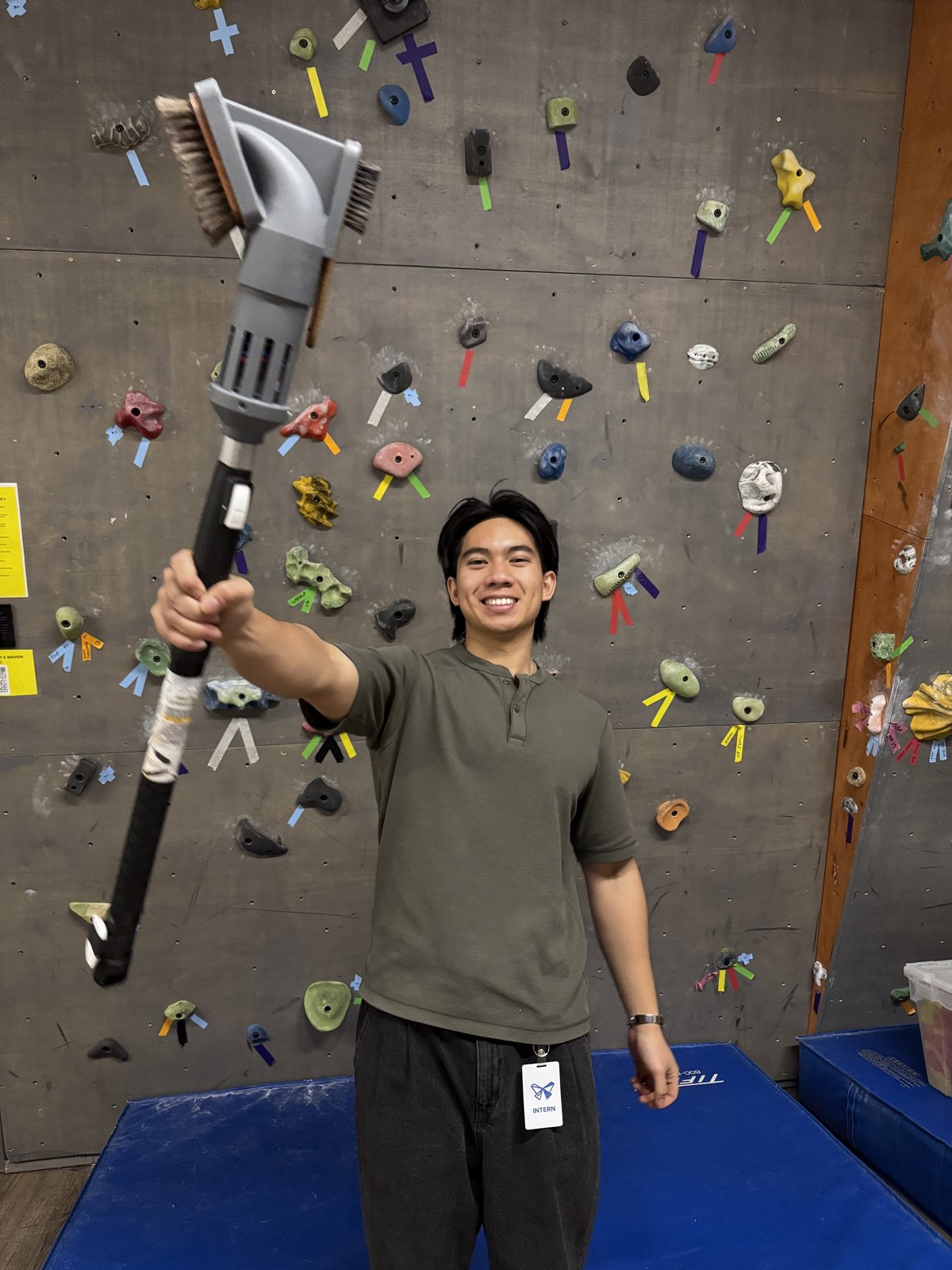
For my entry into the Formlabs Intern 2-day Hackathon, I designed and prototyped a Fan-Powered Rock Climbing Brush Attachment for extendable poles (painter's poles). This was a really fun project that required numerous rounds of prototyping/testing and challenged my ability to turn an idea into reality within 48 hours.
Problem Statement
In the current state of hold cleaning for climbing, a user must brush the excess chalk off a hold with a climbing brush. For best results, users would then blow on the holds to fully clean the hold of any leftover chalk. For holds that are high up, this blowing process is a difficult task. My hackathon project seeks to solve this issue by incorporating a high-powered DC fan that blows fast-moving air through a brush for effective cleaning, while being attachable to extendable poles.
First Prototype
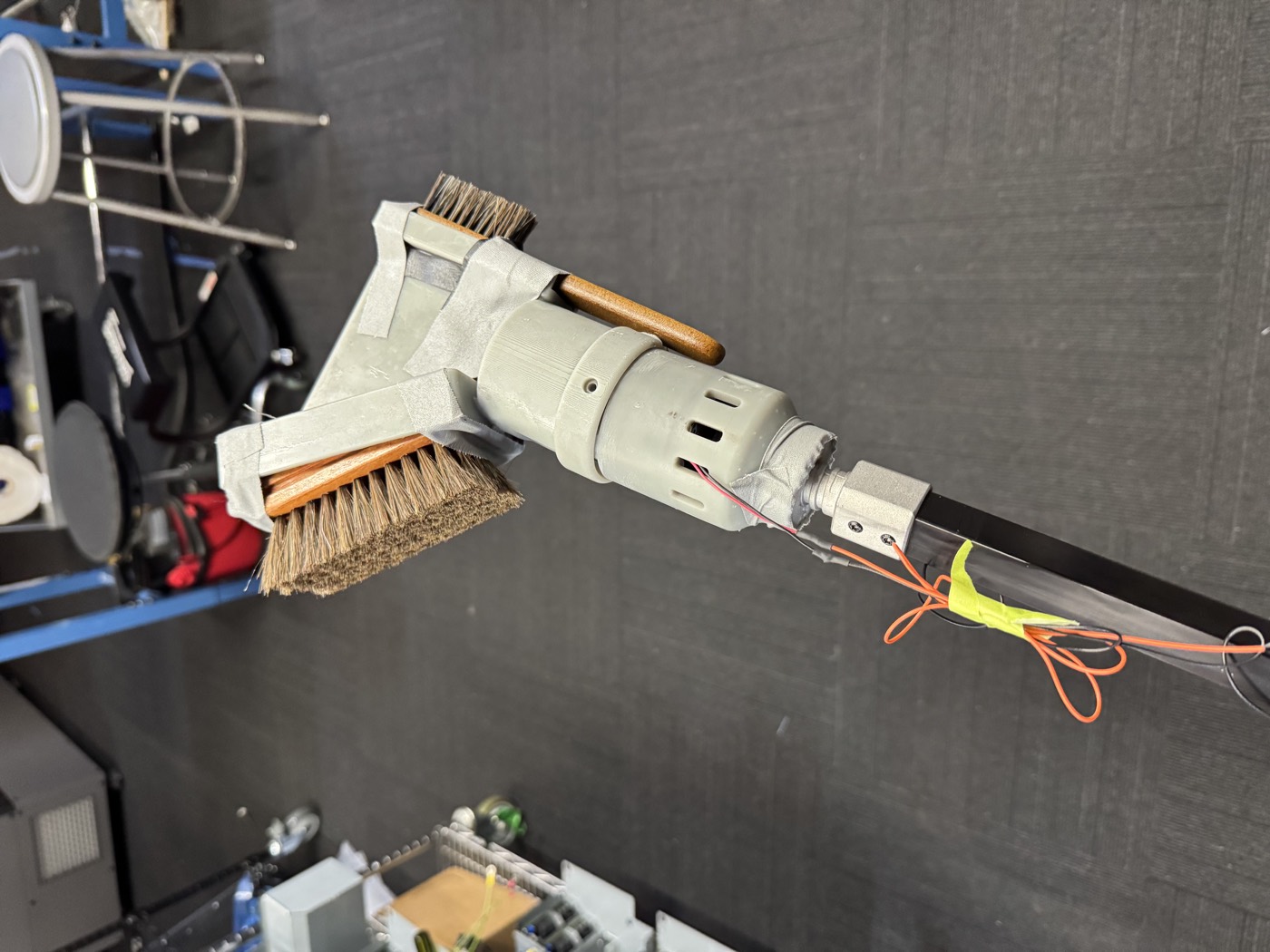
My first proof of concept design used a nozzle that pressed into the brush. All of my electronics were taped to the pole and I used a bluetooth relay to wirelessly power the fan on and off.
First POC (made in roughly 3 hours):
Second Prototype
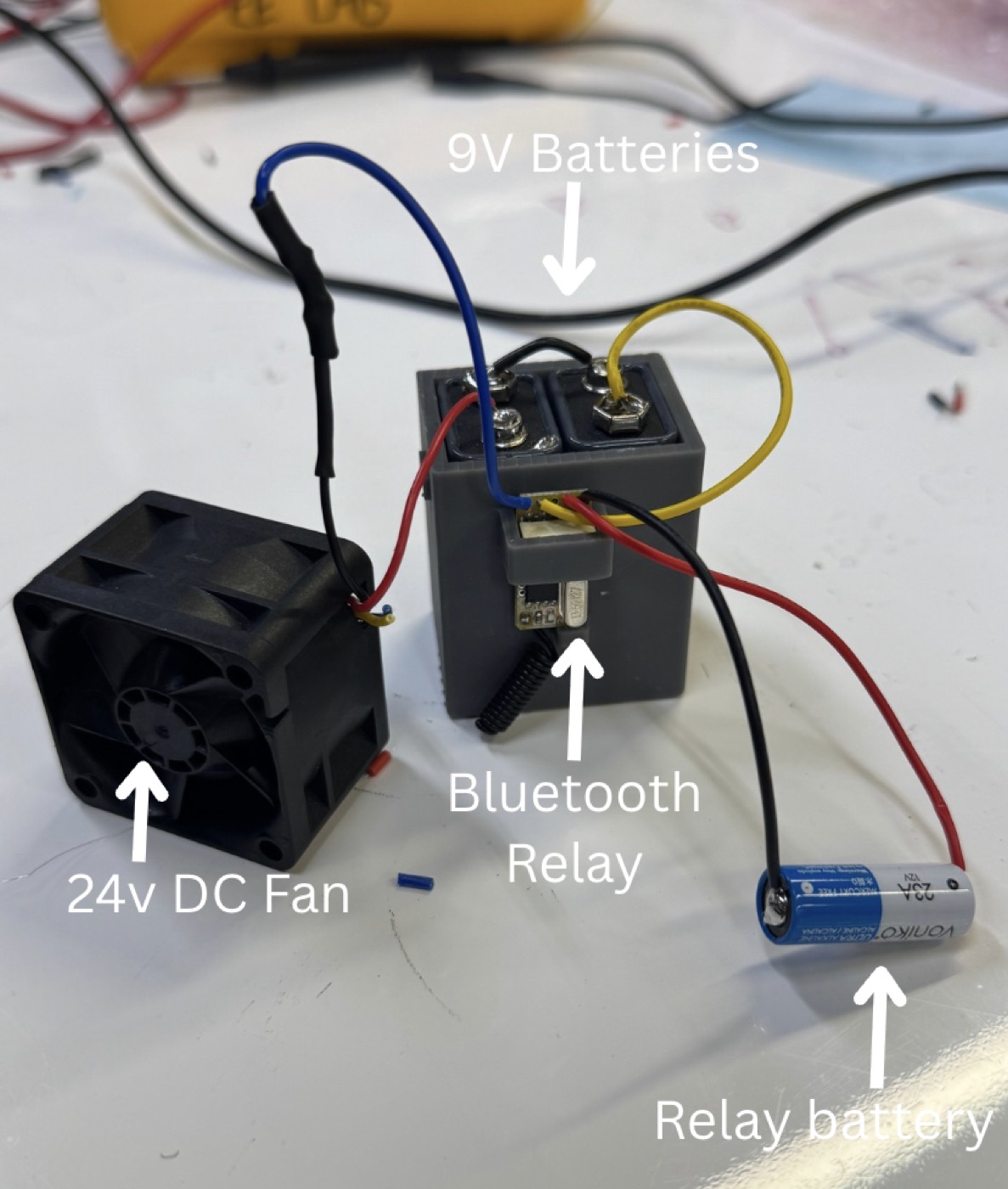
From the first round of prototyping and testing, I was able to prove that the fan concept worked and could blow chalk off the holds; however, it was not powerful enough for noticeable improvements in chalk reduction. Rummaging through the spare parts in the office, I found a more powerful DC fan that operated at higher voltage to test. My 2nd prototype was dedicated to integrating this fan, increasing inlet size for better airflow, and designing an electronics package that could easily drop into the overall housing.
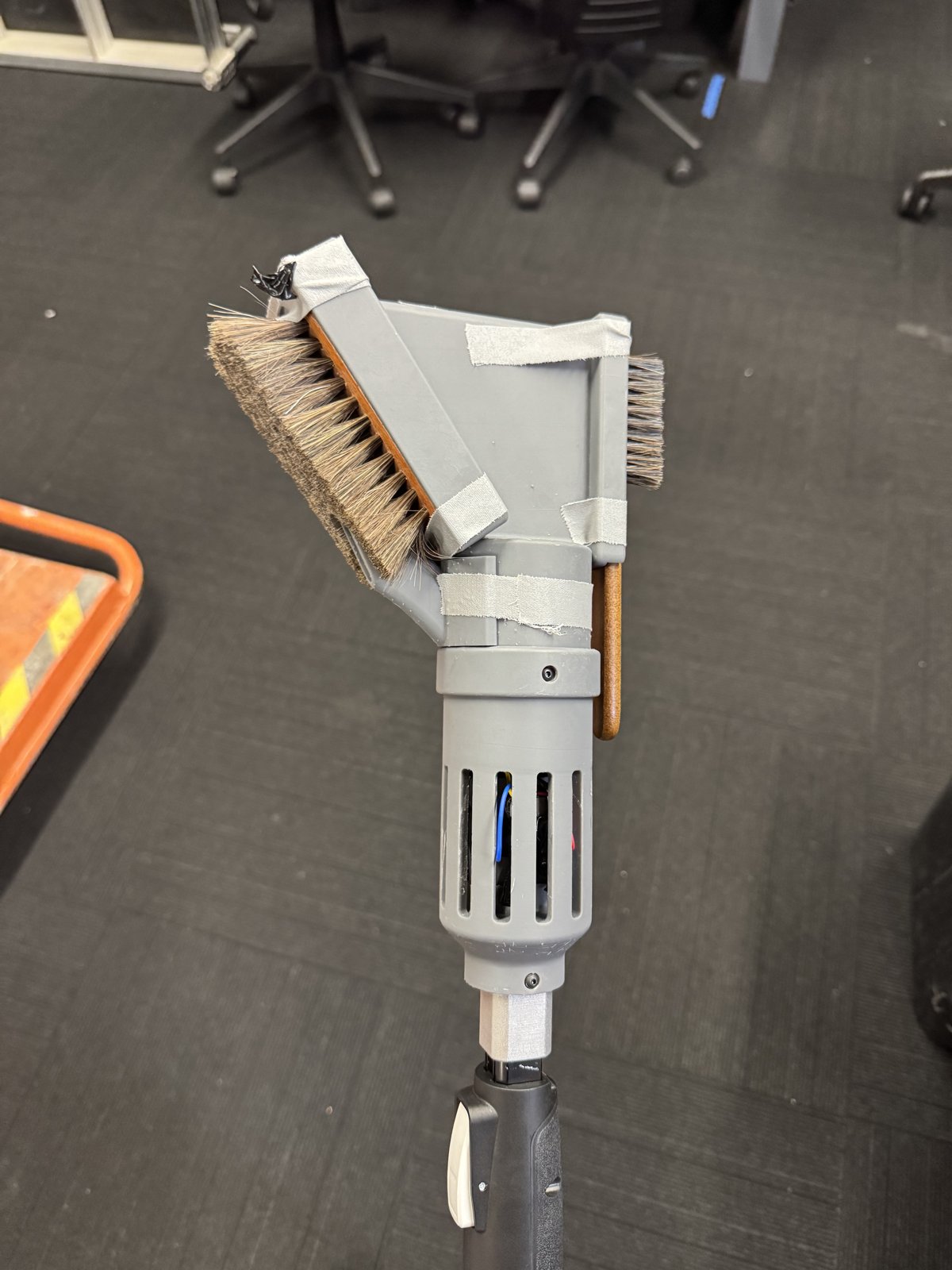
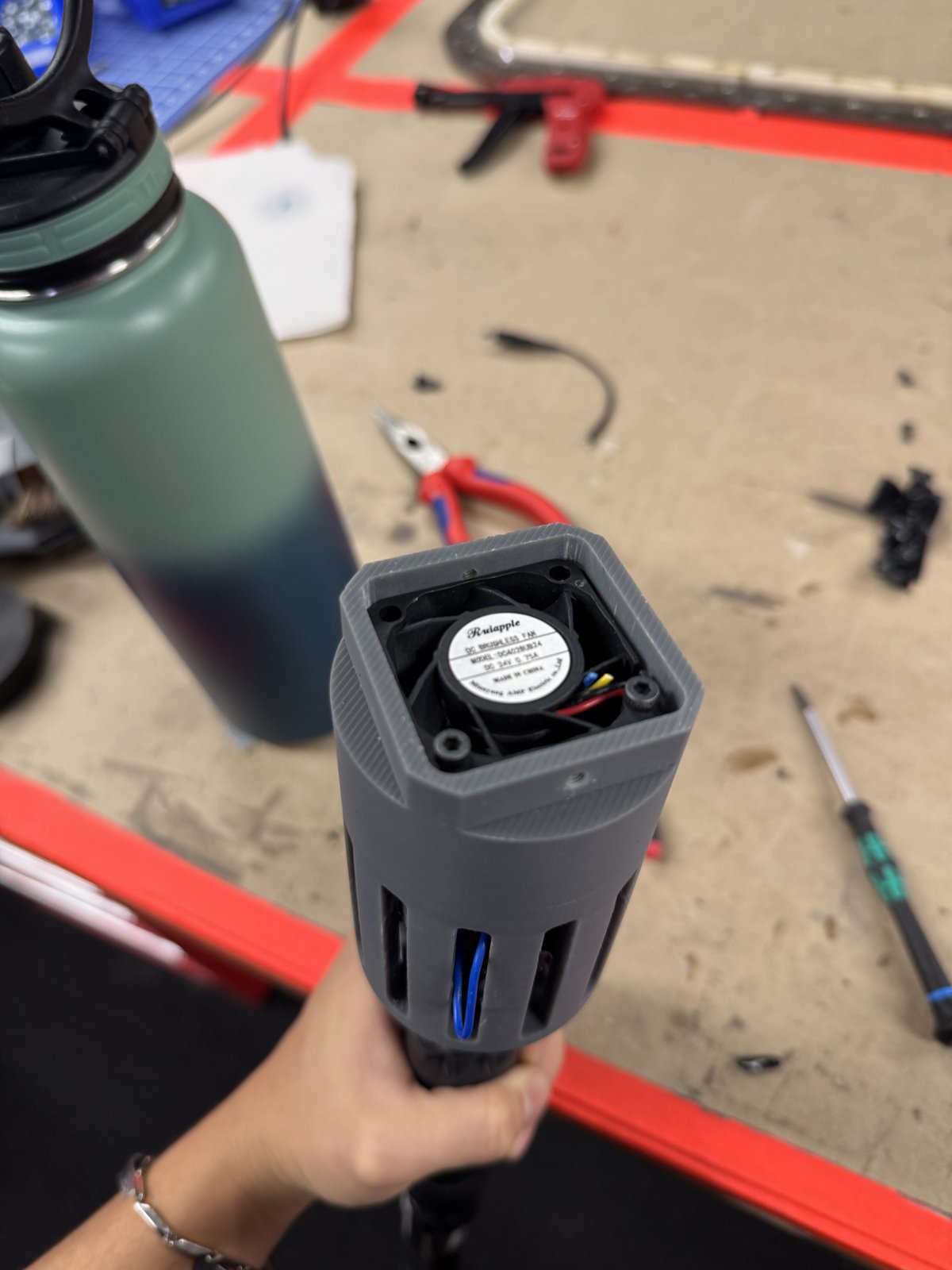
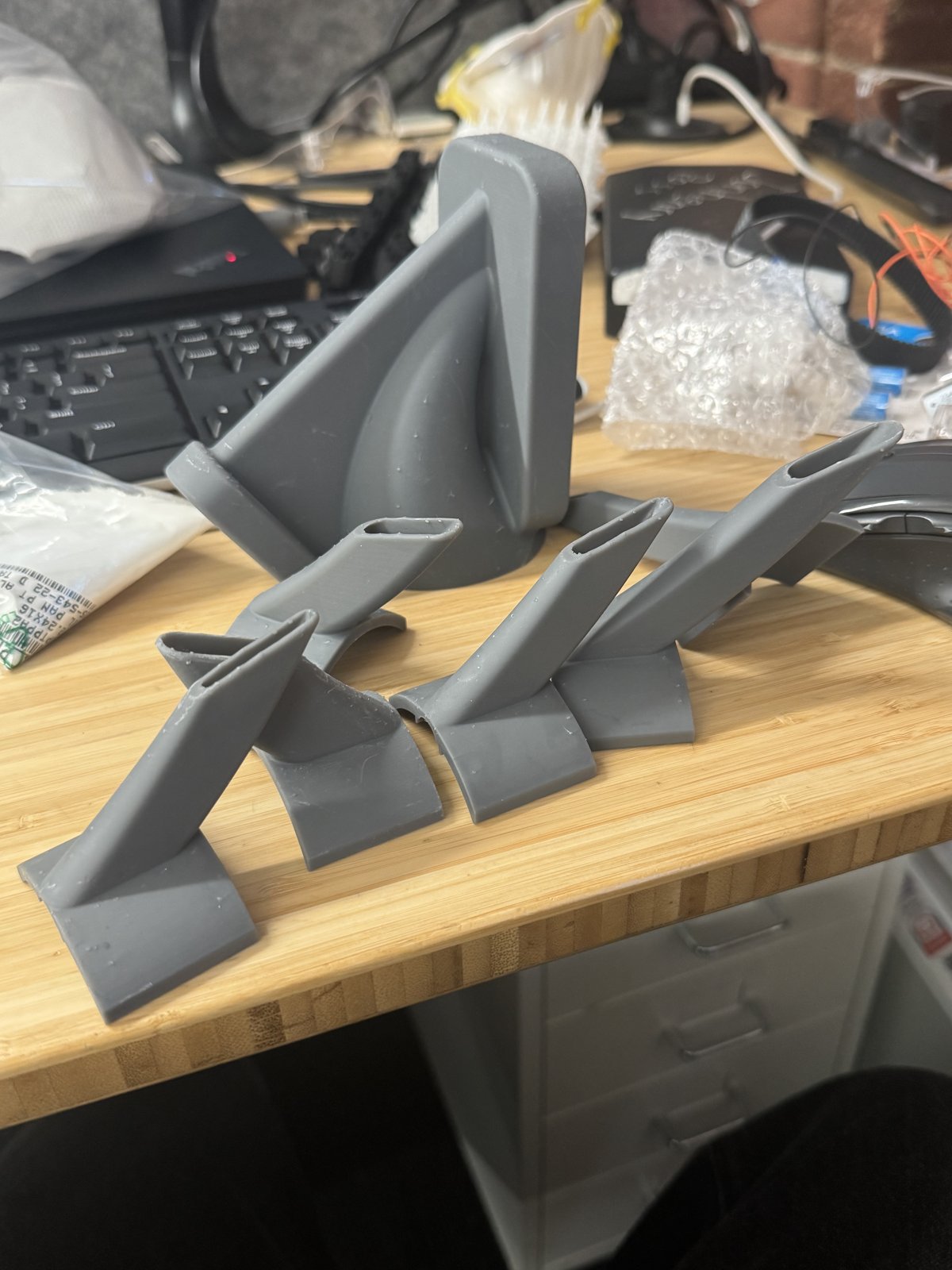
I tested various nozzle prototypes to optimize air flow while not impacting the brush motion. Testing the optimal nozzle for the 2nd prototype, we can see that the bigger fan and larger inlet area increased the amount of chalk being blown off! With this, I successfully proved the functionality of my fan-powered concept.
Final Prototype
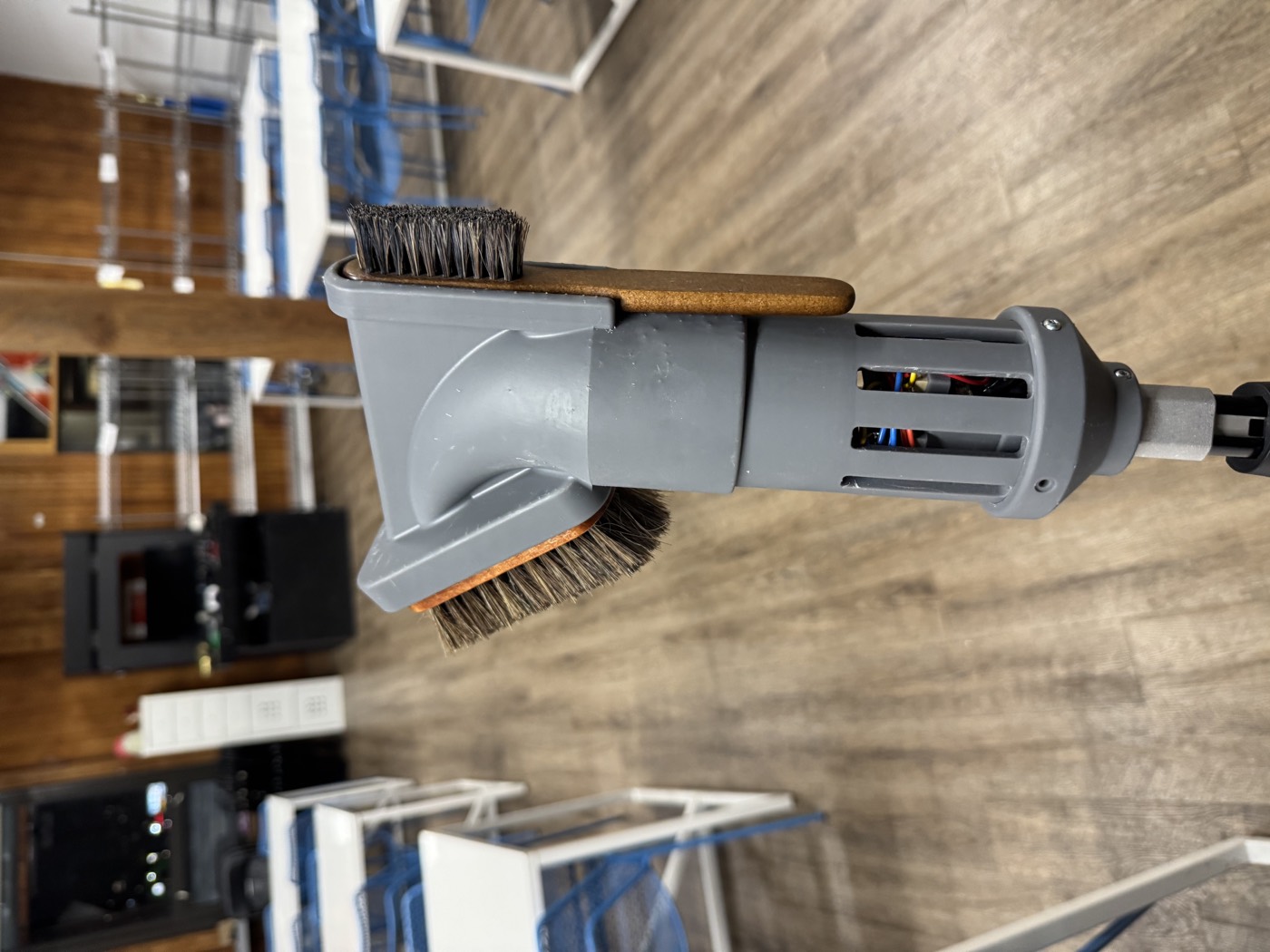
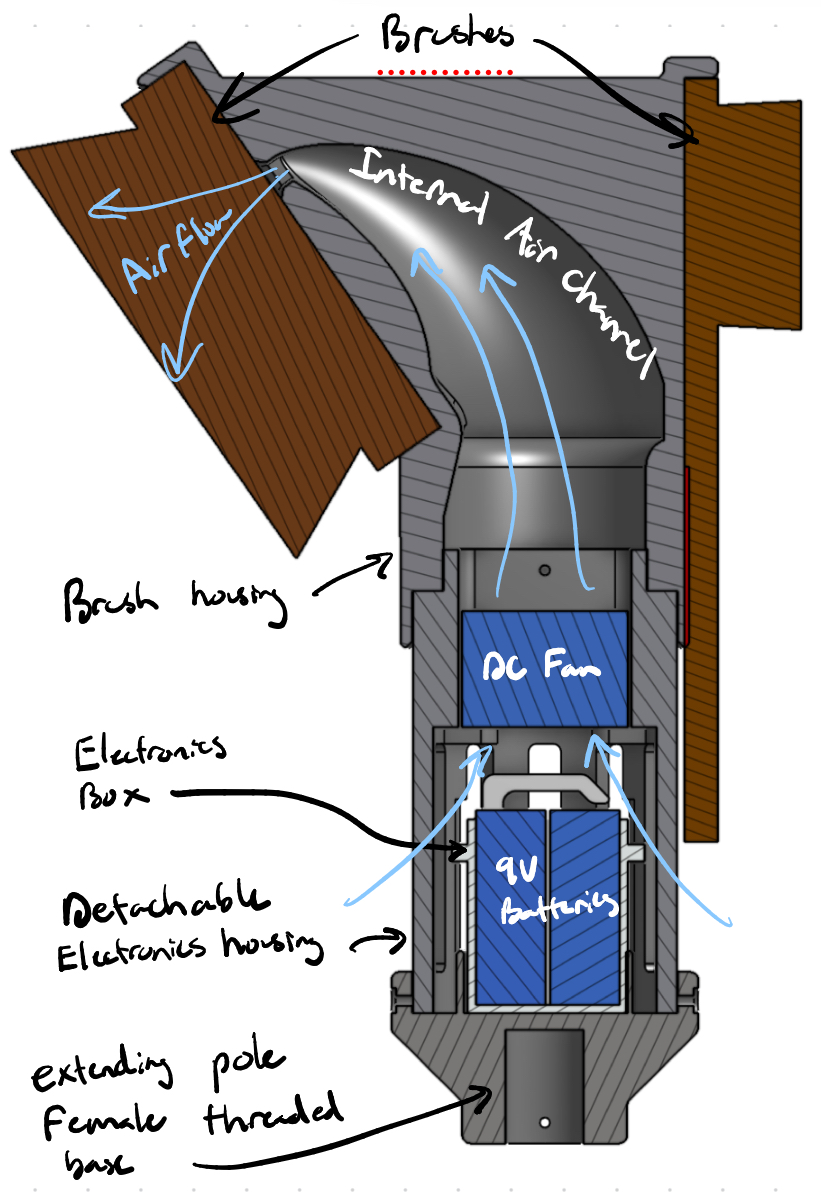
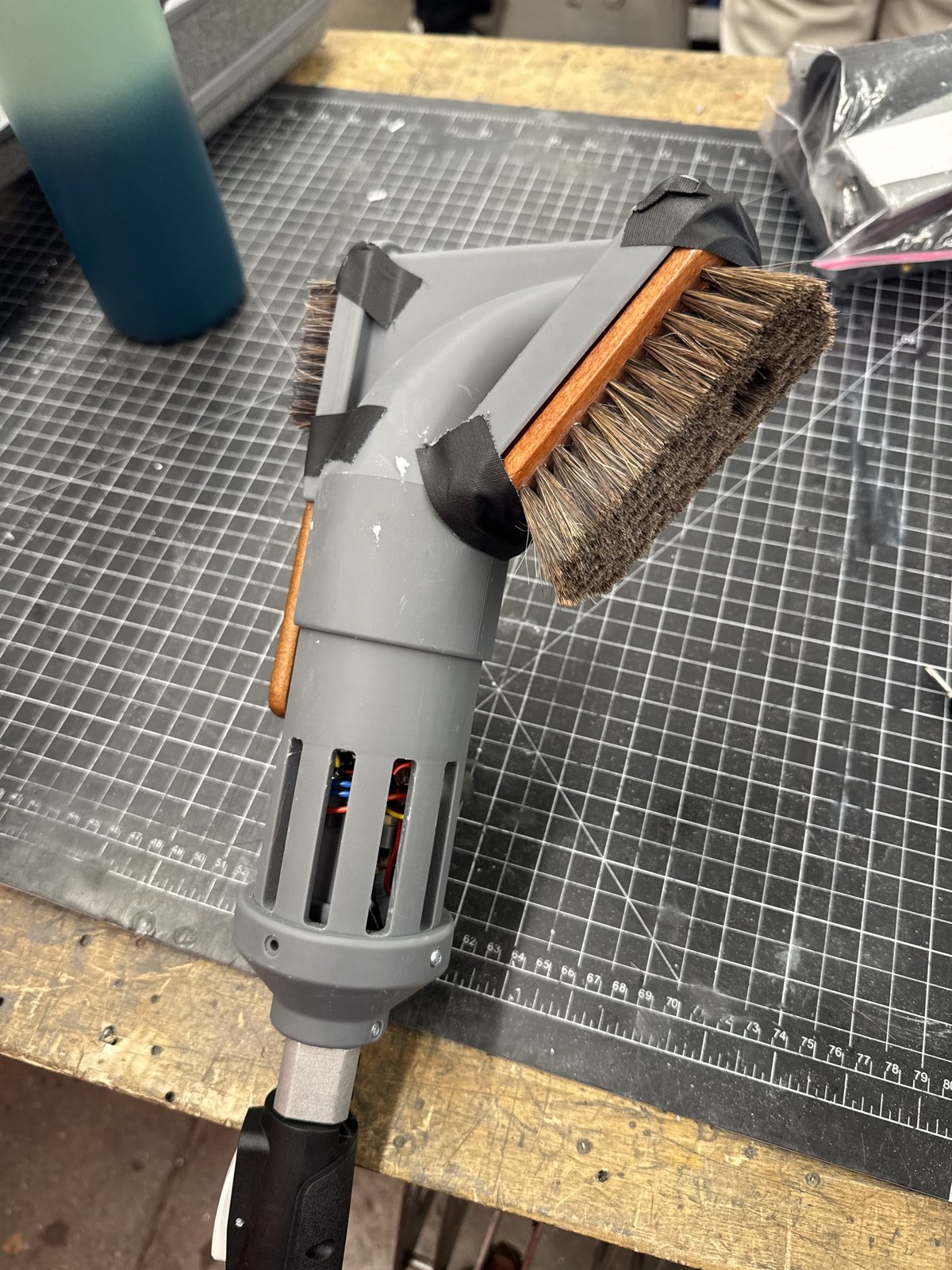
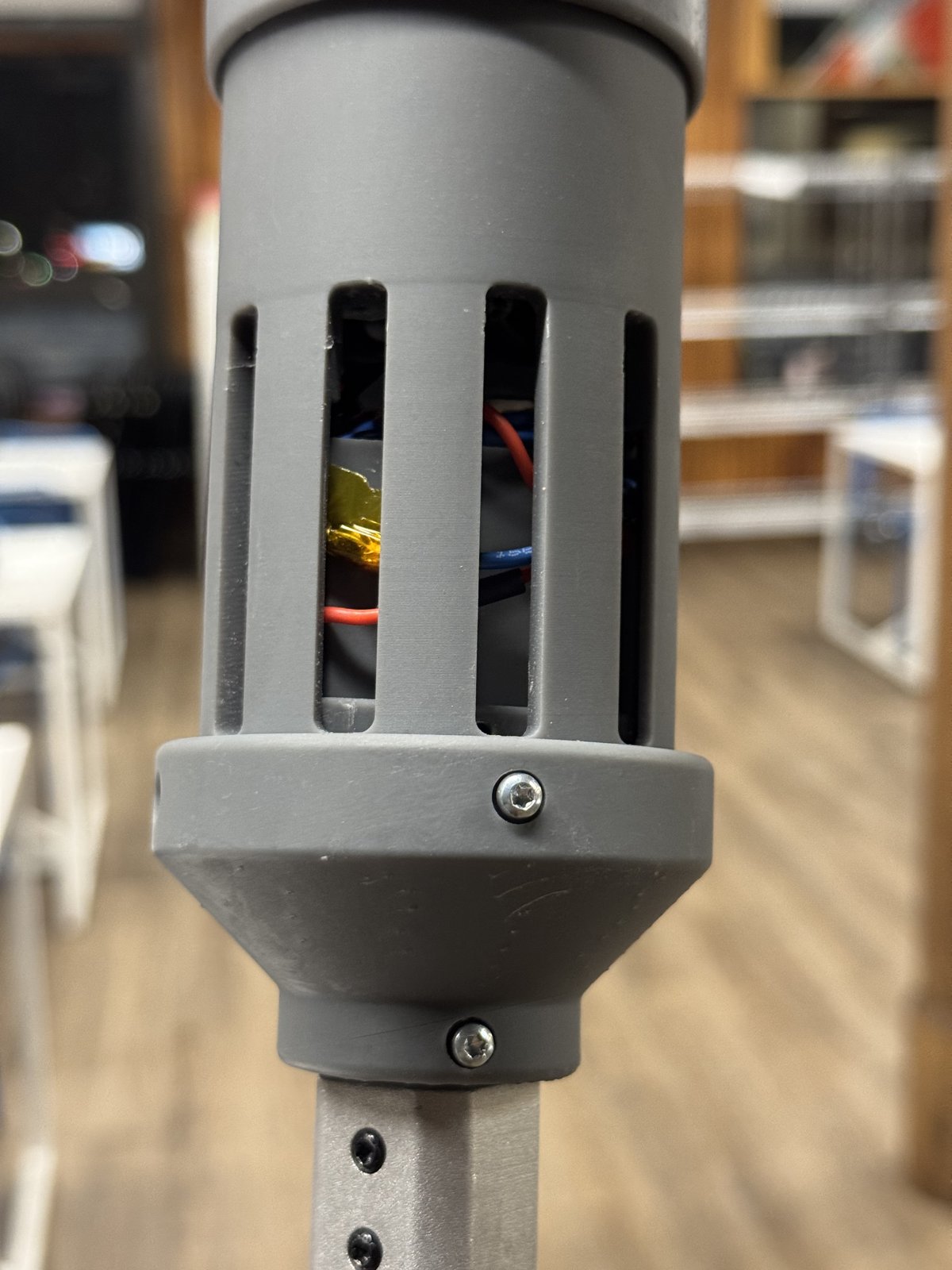
Although the 2nd prototype worked, I noticed that the air outlet nozzle was often not blowing on the same area that the brush was contacting, and/or would interfere with the brushing itself. To address this issue, I set out to eliminate the nozzle altogether and route the air through the brush housing itself into a cutout in the brush. Such a design would require complex surface modeling and designs specifically for Formlabs SLA printing, but would enable a much more functional design. I also redesigned the electronics housing to be removable for easier access to the batteries when they run out of energy.
Conclusion
This project took great advantage of the rapid prototyping skillset I've cultivated both at Formlabs and over the course of my career, as well as the vast 3D printing capabilities at Formlabs. As a result, the final prototype worked surprisingly well! It is able to easily blow off the loosened chalk from brushing, and does not affect the user experience of brushing far holds using an extendable pole. I would love to continue developing this prototype further as an independent project, perhaps with more time. As for improvements, sourcing a higher-powered fan and improving electronics housing and assembly would be my first priorities. I also think I can reduce the size of the whole package further. Regardless, I am proud of my work and thoroughly enjoyed the hackathon experience!