Problem
Raise Robotics was experiencing inefficiencies in testing their two UR10 arms due to the limitations of their current testing structure. The team needed me to develop a new static testing mount for UR20 arms that would be stronger, more adjustable, and modular compared to the current structure. It had to hold a 30kg heavier payload and be mobile.
Solution
To address Raise Robotics' problem, I developed a new static mount that was stronger, more adjustable, and modular compared to their previous testing structure. I used Solidworks to design the structure with 80/20 extrusion pieces and performed FEA evaluations of the F.O.S. and deflection (ensuring deflection below .3mm).
Static Mount Designs
My initial designs used a counterweight system, which I ended up switching for 4 large mounting screw points on the bottom of the mount system.
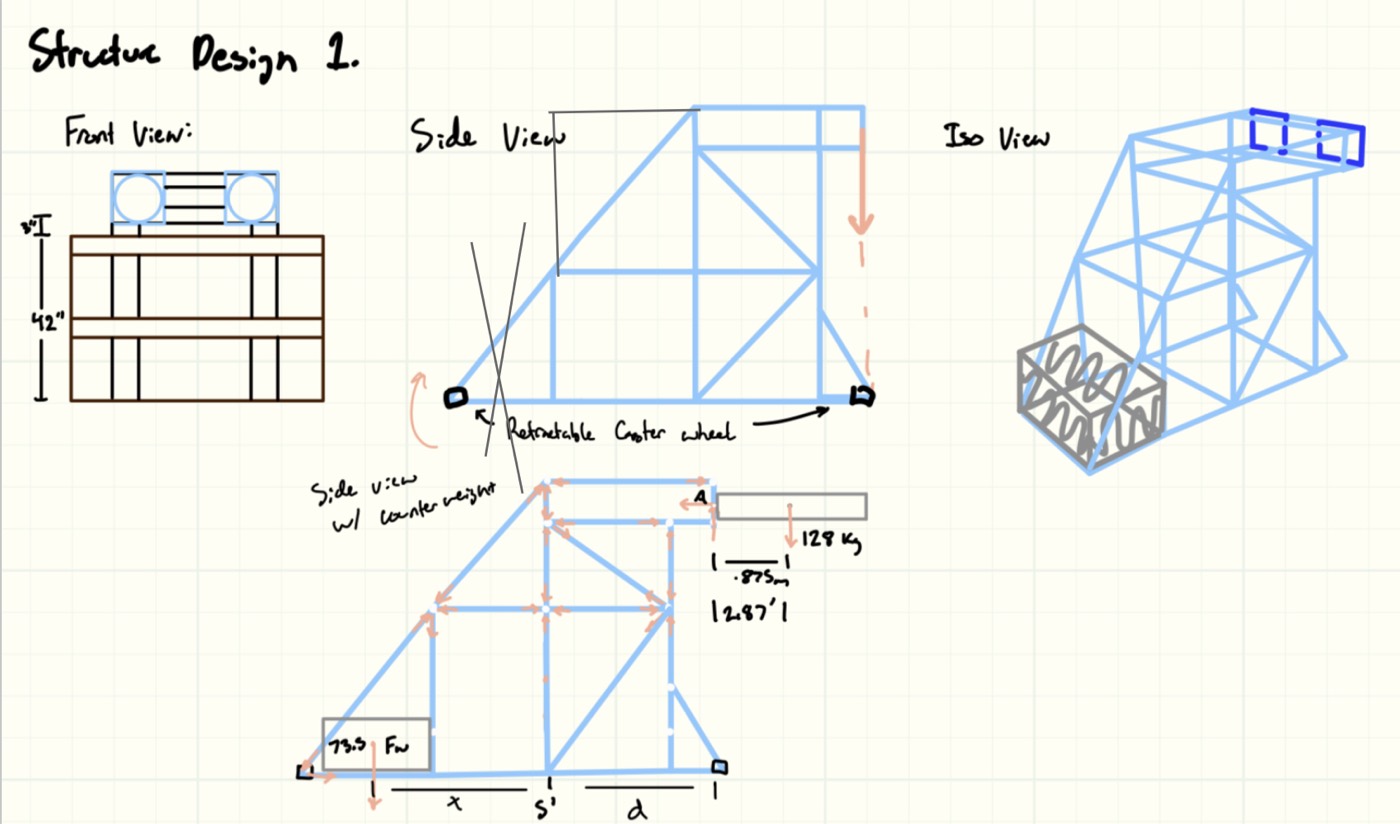
Initial design:
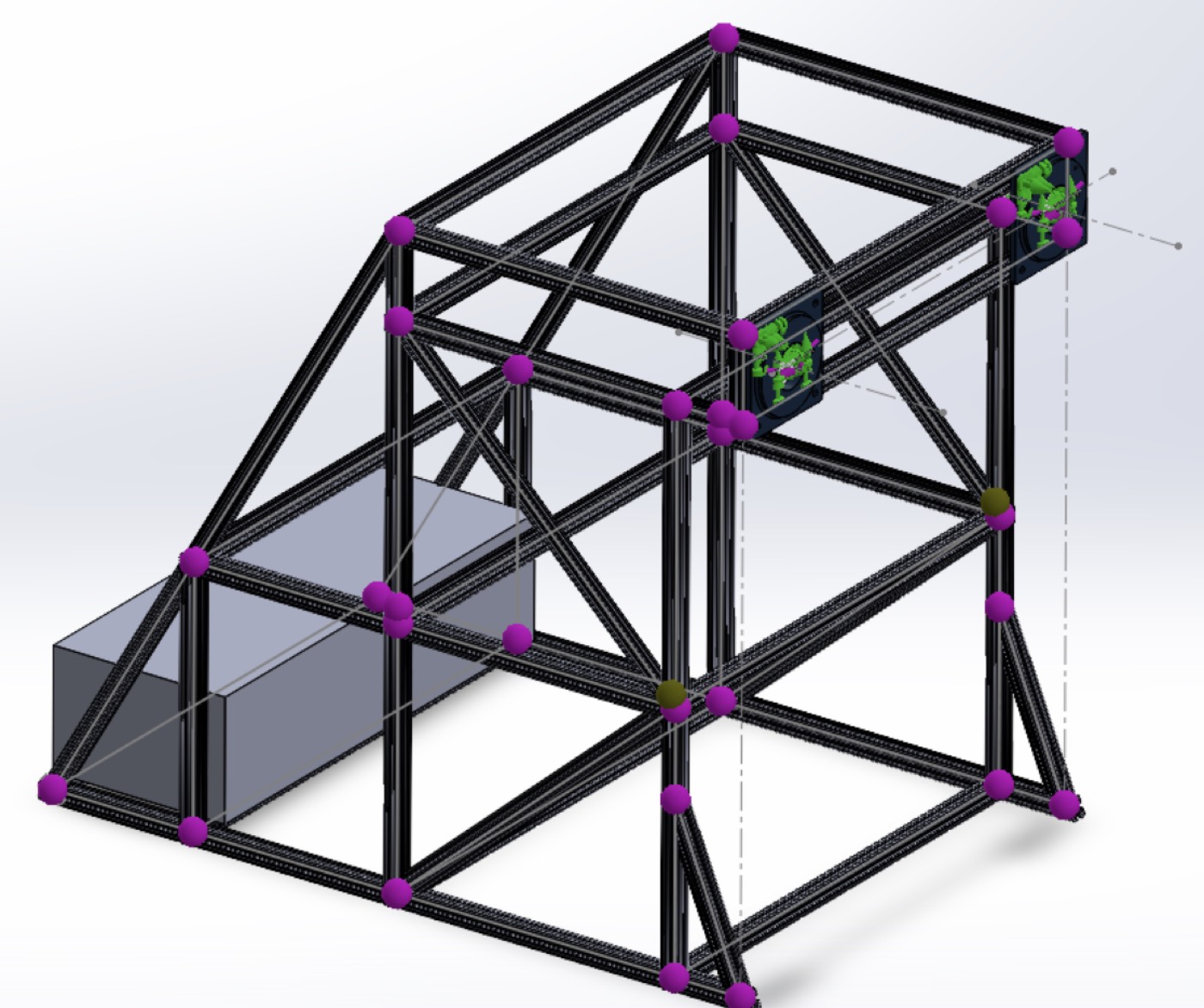
Revised design:
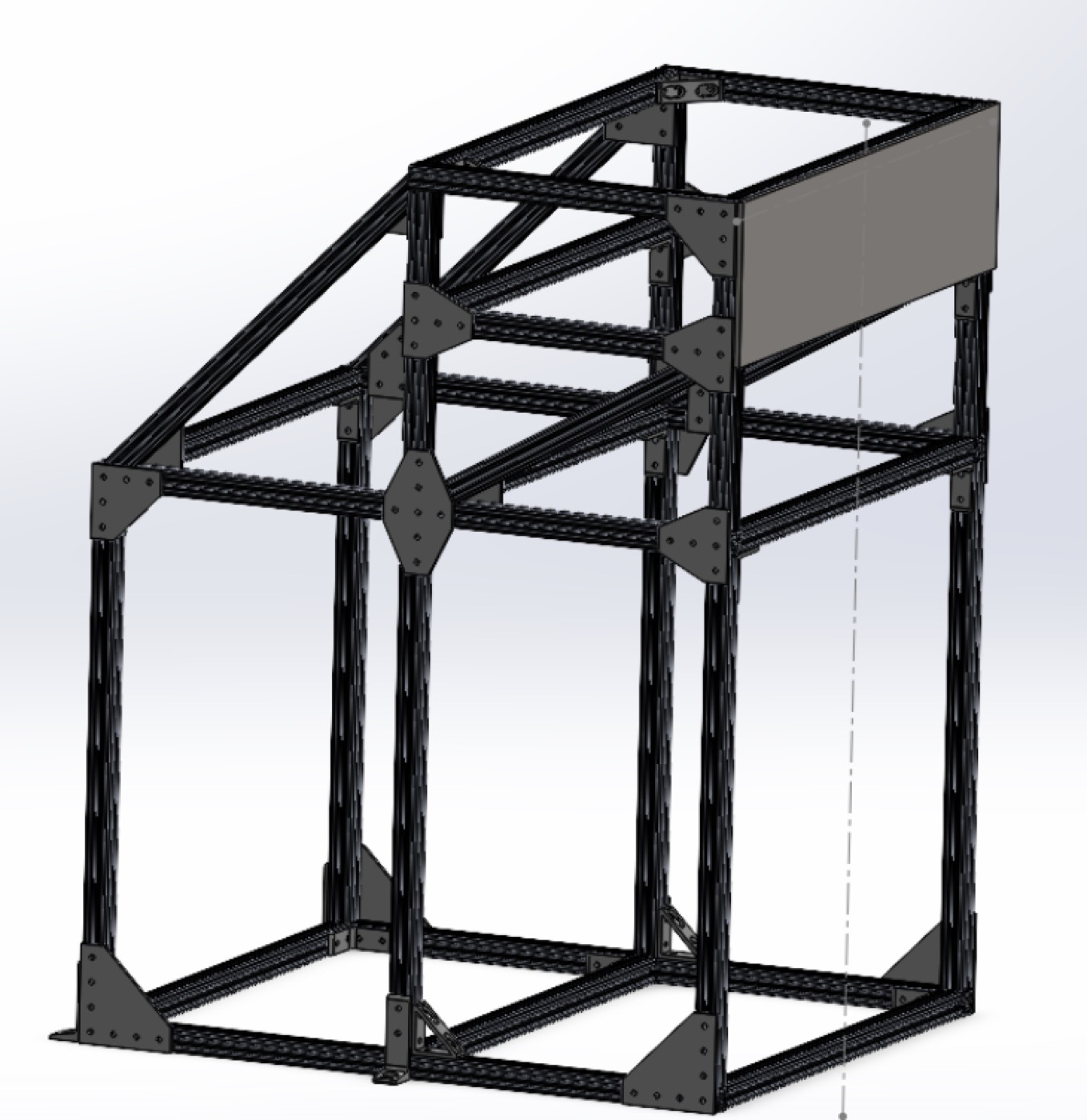
After the design was revised and approved, I performed FEA evaluation at maximum load conditions, iterating the mount design to achieve a deflection below .5mm. The subsequent mount had a F.S. of 6.
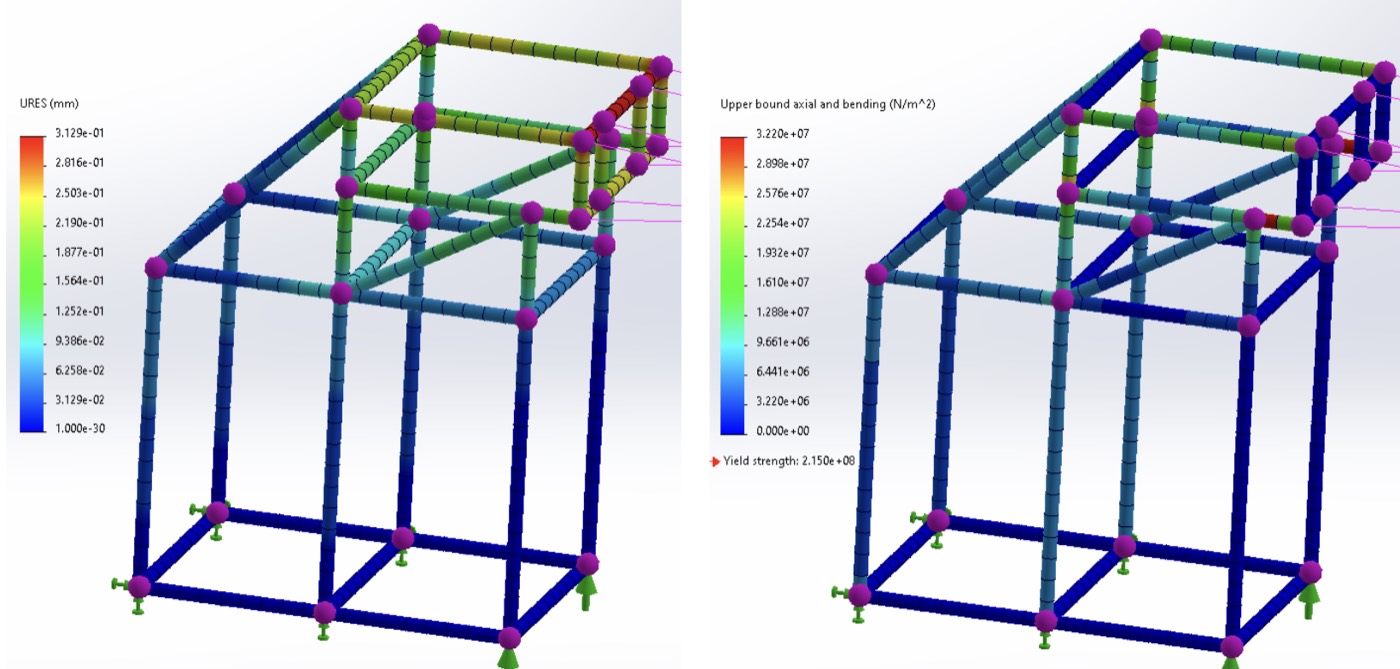
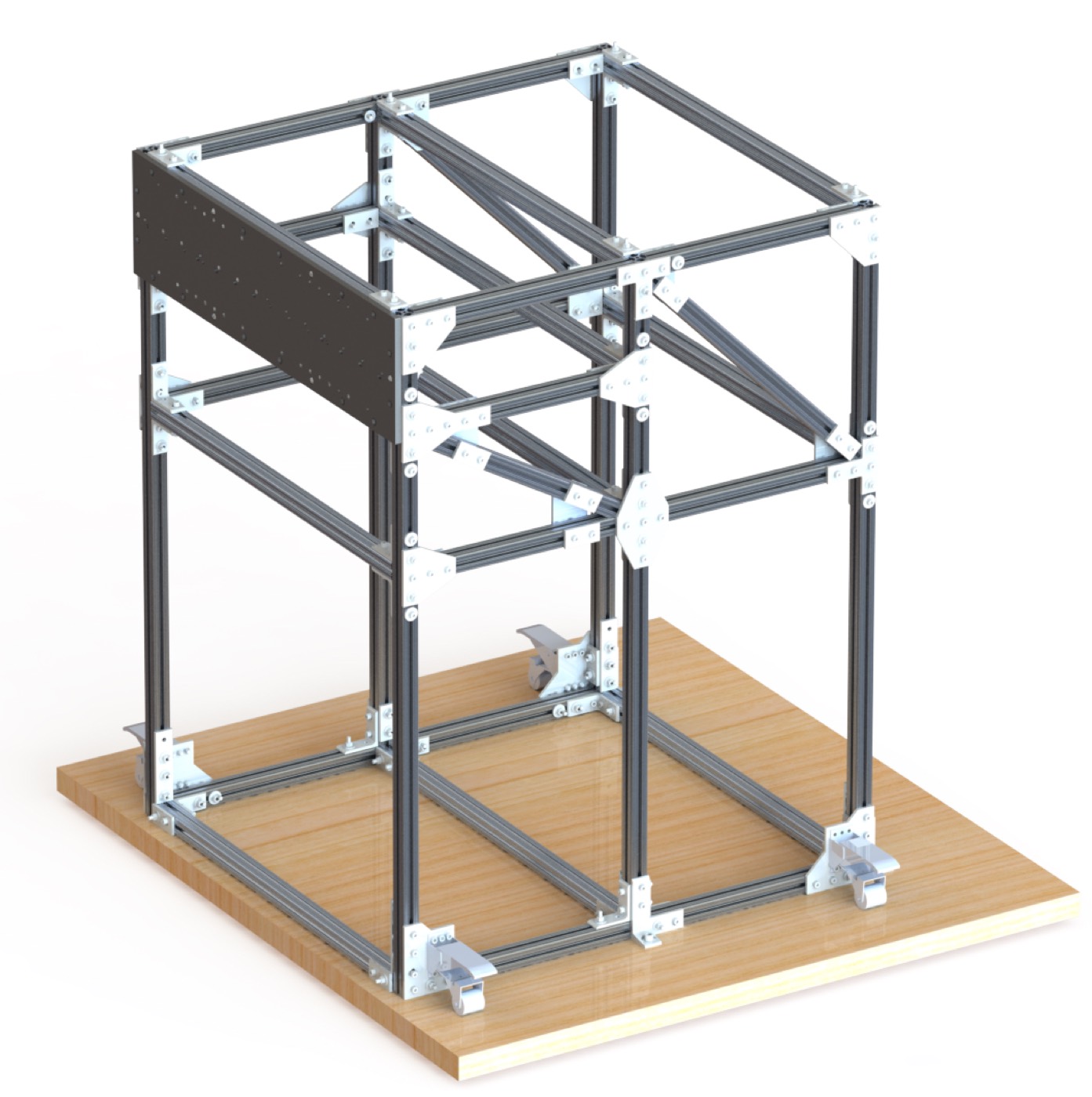
Finalizing this design, I was then tasked to create a modular mounting system for easier movement of robotic arm placements and to make the top of the assembly flat for part mounting. I designed a steel mounting plate with 4 new mounting positions and made the static testing system more square.
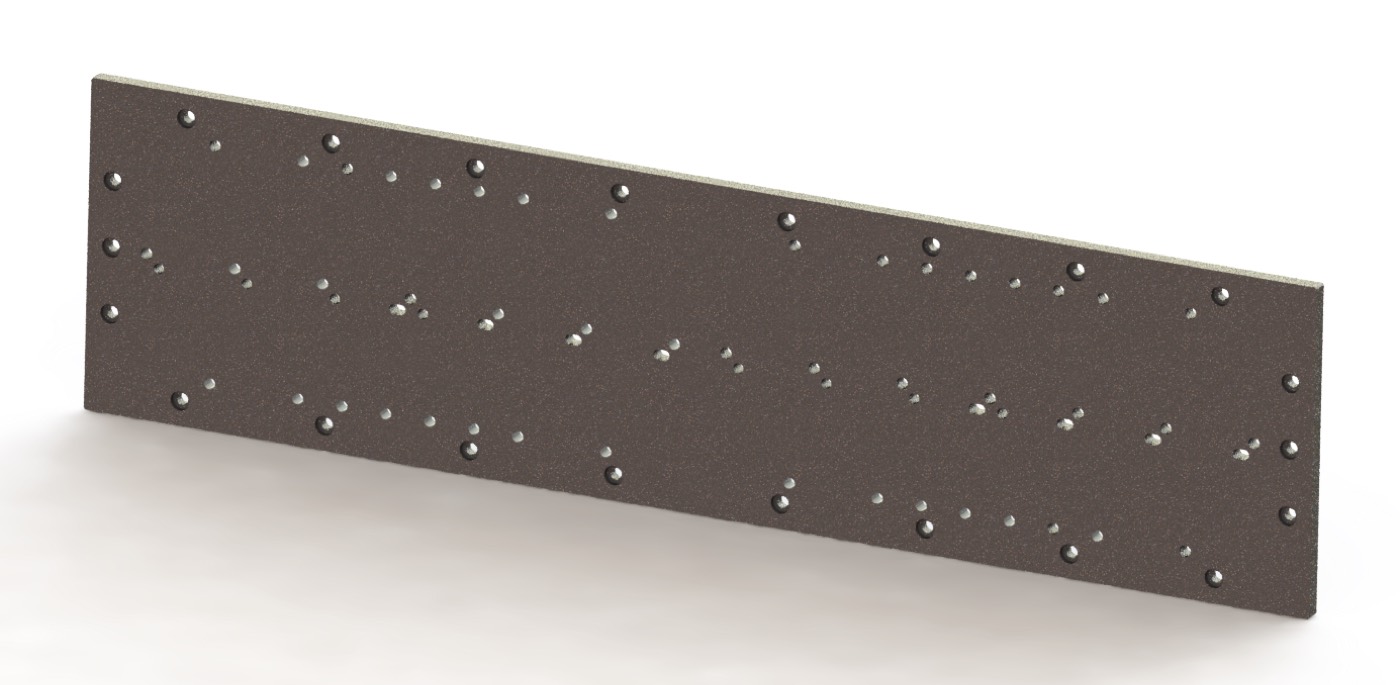
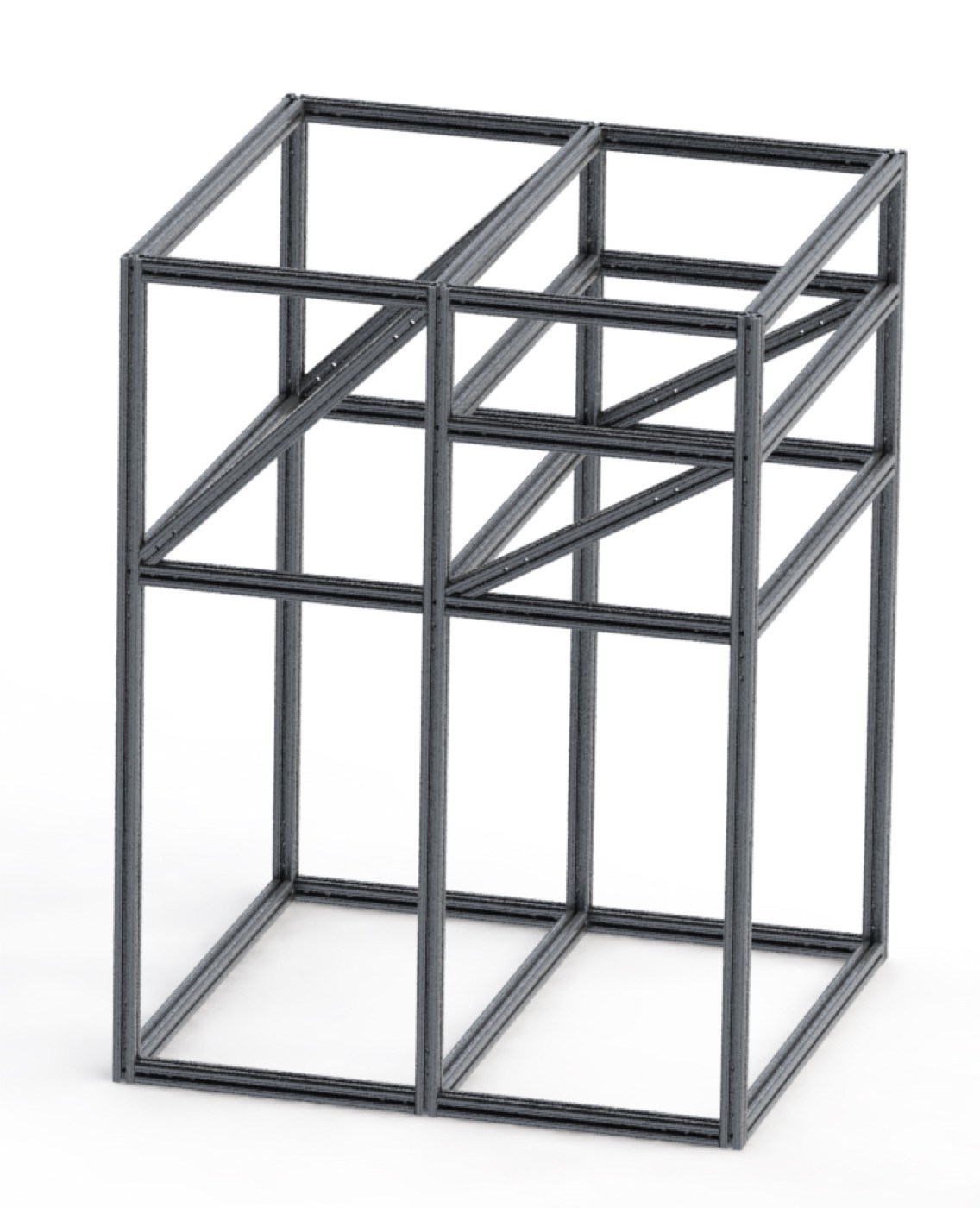
After the final design was approved, I created an assembly including 600+ brackets, screws, nuts, and washers. I also designed custom 80/20 brackets for mounting clearances and to attach caster wheels for easy system movement.
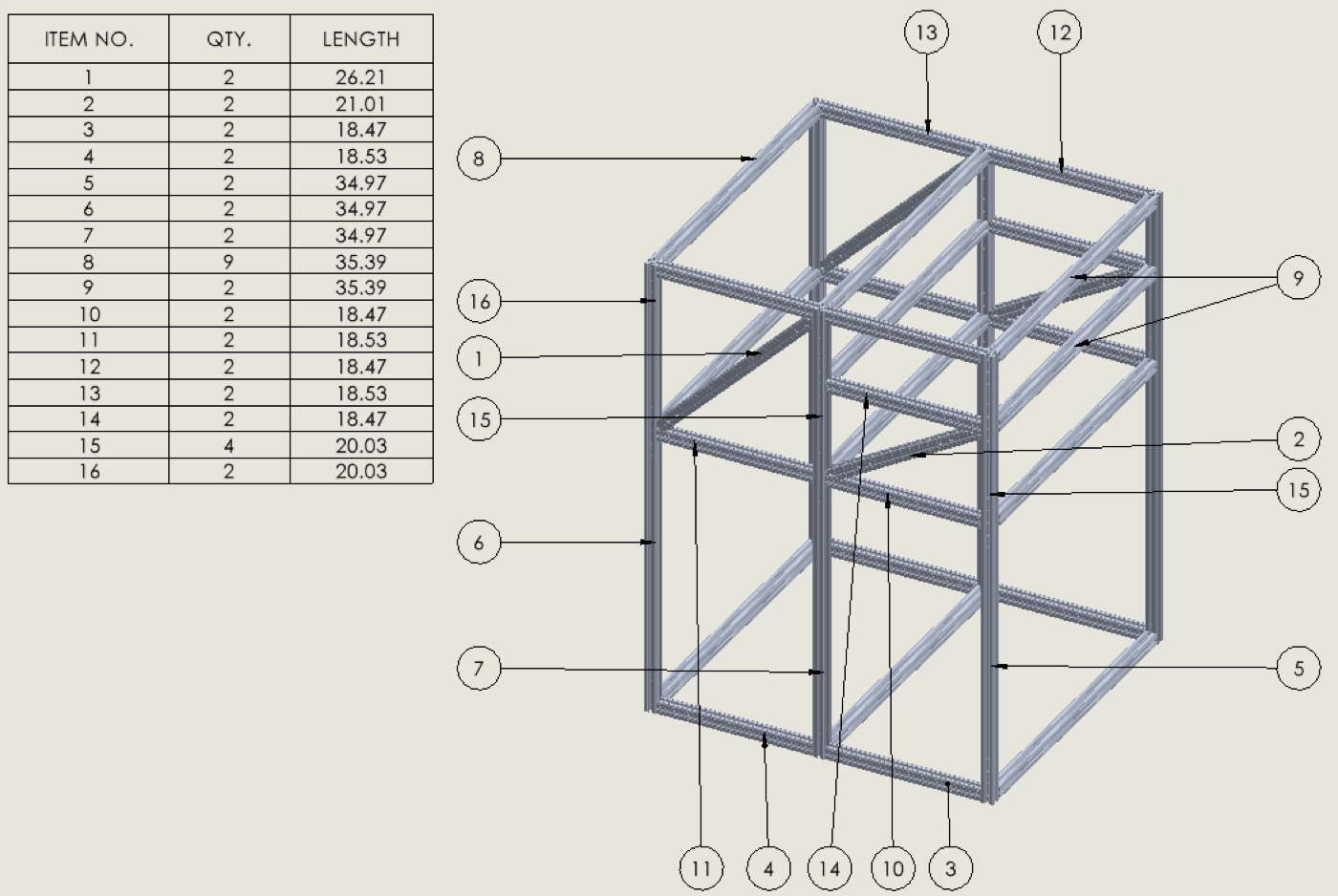
Finally, I produced a cut list and drawings for 20 unique parts for manufacturing and assembly.
Impact
Dramatically increased testing efficiencies.
Decreased production costs by more than $1000
Added mobility through heavy-duty Caster wheel attachments.